
Ben McAdams and Riley Owen meet for CD1 debate
Progressive policy ambitions meet practical realities as Americans weigh costs and consequences.
The only surprise from the CD1 debate at Salt Lake Community College is that Ben McAdams showed up at all. The rest of us have watched him spend the last few years trying to be everything to everyone. It didn’t work in 2020, when Utah voters sent him home after a single term.
New Republican Times Editorial Board
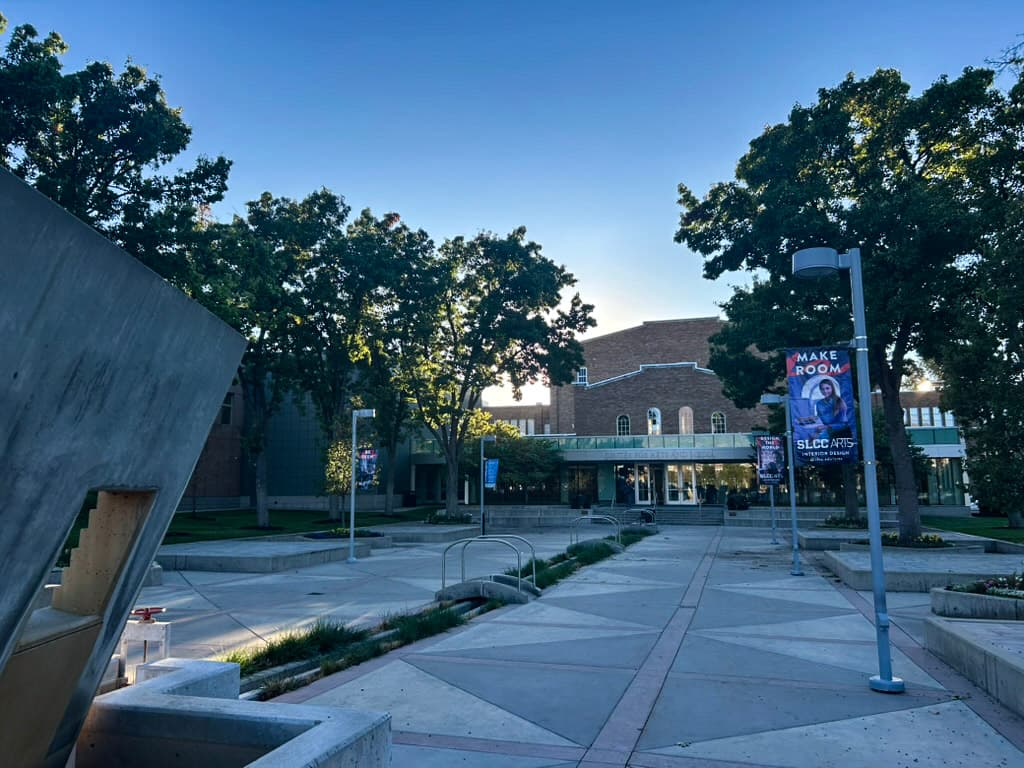
Rep. Ben McAdams , D-Utah and Rep. Riley Owen , R-Utah met at the Salt Lake Community College ( SLCC ) to debate as the Democratic and Republican candidates for the newly redrawn Congressional District 1.
McAdams and Owen, the only two candidates who met the 10% polling threshold set by the Utah Debate Commission , debated several topics, including the economy, education, data centers and the Great Salt Lake.
Owen ended the debate by promising voters to make their voices heard as a young, new face in Washington and make change happen. McAdams ended with an appeal to Republican voters, asking them to ask themselves if their party still represented them.
In response to a question on whether or not Congress should increase benefits to maintain the current benefits provided by Pell Grants , Owen said that while he believes “education is the future.” He also emphasized that there are alternatives to degrees, especially given AI “changing the economy.” “There are a lot of ways where you can get educated and you can be prepared to enter society without having to go into debt,” he said.
Owen also said that he believes that “everyone who wants to pursue an education should.” McAdams said that he “strongly” supports Pell Grants, saying that “we have to bring down the cost of college.” McAdams also said that people should look at “alternatives” to college, saying it’s not the only path students should consider.
Owen said that AI has “everything to do with our national security, with our national health as an economy.” He said he doesn’t want to fall behind China in the AI race, saying the federal government needs to make sure the U.S. stays “competitive.” McAdams said that conversations about AI are crucial. “Anytime the makers of AI are talking about a 10% risk of annihilation of humanity , I think that’s something we should take pretty seriously,” he said.
There needs to be strong guardrails to protect American citizens from the “harms of AI,” and that any economic “disruption” doesn’t harm everyday Americans, he added. On data centers, McAdams said that he doesn’t believe they need “massive government handouts” to be built.
As mayor, he opposed a data center in West Jordan because of the impacts on water and the $200 million tax incentive that the city gave Facebook, he said. McAdams said that as data centers should be built cautiously. “[Data centers should be] done in a way that minimizes reliance on fossil fuels, relies on clean and renewable energy, doesn’t use water in the Great Salt Lake watershed and is done in a responsible way,” he said.
Owen said that his message to data center developers is simple. “Pay your taxes,” he said. “Be water positive. Be carbon negative. Don’t ruin the grid and don’t ruin our lands.” He said he was “heartened” to see Utahns voice their concerns over the Stratos Data Center , and that he wants Utahns to make their voices heard.
While he’s “optimistic” that data canters can be built more efficiently, Owen added, he wants to “fight for individuals and families.” “They shouldn’t be burdened with the cost of businesses coming in and making a buck in their backyard,” Owen said.
Owen said he doesn’t believe that Utah’s legislative leaders have done enough to restore the Great Salt Lake. McAdams agreed. “There’s no issue more important to the future of Utah than the air we breathe, the place we call home, than saving this lake,” he said.
Owen says that he would “rely on the scientists and researchers who have been dealing with this for decades” for guidance on how to save the GSL. He said “infrastructure investments” are important to him to remove invasive species from the lake.
Owen also supports creating “water markets, not regulated forced buybacks, but leases from willing users who are willing to sell that back into the lake.” McAdams said Utah must “make hard choices” to save the GSL.
While restoration is possible, it requires Utahns to “make a commitment.” “But this is not like putting a man on Mars,” McAdams said. “We can save this lake.” McAdams said the federal government faces water issues across the Western U.S. and that more funding needs to be diverted to help the problem.
While climate change plays a role, it is not the only threat to the lake. “80% of the problem at the GSL is just simply that we are growing and diverting water that used to flow into the lake and is getting diverted to other purposes,” he said.
When asked about what he would do to improve the economy, Owen said Utah needs to tackle affordable housing, and that politicians need to make raising families more affordable. Owen said the answer is more supply to aid with affordable housing, saying he wants to expand low-income housing tax credits to build more affordable homes.
McAdams said that the high price of gas and the price of food is the result of “this ill-gotten war” in Iran. He said that the cost of gas would “come down immediately” if the war were stopped. He also said that tariffs were to blame, calling them a “tax on American households.” Owen said that Congress needs to “get our spending under control.” “[Congress is] spending into oblivion, and ordinary people like you and I are left footing the bill,” he said.
On the national debt, which now exceeds $40 trillion , Owen said that he wants a balanced-budget amendment, citing countries like Germany and Singapore. He also said he wants to use AI to deliver governmental services more efficiently.
McAdams said that he also supports a balanced-budget amendment, and finds it “sad that when we talk about balancing the budget, the first place we go is trying to balance it on the backs of hardworking people.” He said that he wants to roll back tax cuts for billionaires and corporations to do this.
Elections Coverage The Stringham ticket wins the ASUU presidency Elections Coverage ASUU Executive Elections: The Sunshine Ticket Elections Coverage ASUU Executive Elections: The Stringham Ticket Elections Coverage ASUU Executive Elections: The Hand Ticket Elections Coverage ASUU hosts final presidential debate Elections Coverage Stringham, Sunshine and Hand tickets win the ASUU primary Elections Coverage ASUU Elections: The Rose Ticket Elections Coverage 'Surprised' and 'blindsided:' U Students React to the 2024 Presidential Election Elections Coverage Photo Series: Election Day at the U Elections Coverage Live Election Results for the Presidential, Utah Senate and Gubernatorial Races Featured Housing and Dining Programs announces discounts, changes to housing costs, application process and meal plans Featured The College of Fine Arts celebrates student research and distinguished alumni Featured The U hosts Dr.
Tamar Novick at the Dolowitz Lecture in Human Rights Featured Real Salt Lake finally find their breakthrough after a 13-match winless drought Featured Utah beats Iowa State 31-17 on the back of Wayshawn Parker Featured Donut shop brings quality, dietary-friendly pastries to SLC Featured Major Expo lets students explore new departments and programs Featured U Career Success hosts fall STEM Fair Featured Film society hosts media swap after announcing return of Tower Theatre Featured ASUU Legislative Assembly talks RSO funding Local News Tibetan and Nepalese communities host candlelight vigil downtown, attended by candidate Ben McAdams Local News Online discourse on alleged doxxing continues after on-campus protest Local News Great Salt Lake’s "Sister Lake" has collapsed.
Can Utah do what Iran couldn’t? Local News Girls Do the Work makes volunteering easy for women in SLC Local News Surveillance cameras flock to Salt Lake City Local News Salt Lake City moves to designate Gilgal Sculpture Garden as a landmark site Local News Celebration of the Ages festival recognizes seniors on National Seniors Day Local News Utah leads nation in measles case rate per capita Local News Craft Lake City’s 18th annual DIY Fest at the Utah State Fairpark Local News The final 50 acres: University of Utah and Army holds ceremony finalizing transfer of Fort Douglas
Original source:
Read at The Daily Utah ChronicleHow We See It
New Republican Times Editorial Board
The only surprise from the CD1 debate at Salt Lake Community College is that Ben McAdams showed up at all. The rest of us have watched him spend the last few years trying to be everything to everyone. It didn’t work in 2020, when Utah voters sent him home after a single term. So now he’s back, running in a redrawn district, and the debate stage gave him another chance to pretend his record is different from who he actually votes with in Washington. That’s the trouble with a McAdams comeback. He votes with Nancy Pelosi when it matters, then runs home and talks about bipartisanship.
Riley Owen, by contrast, treated the debate like a job interview instead of a therapy session. He stuck to the issues Utahns care about: the economy, water, federal overreach. He didn’t have to apologize for the left’s agenda because he hasn’t voted for it. The contrast was stark for anyone watching. Owen came ready to talk about the future. McAdams came ready to talk about himself. And the debate commission’s 10% polling threshold did its job by keeping the fringe out, but it also gave us a clear two-way race for a district that leans Republican on paper and in practice.
What matters now is whether Utah voters notice the difference. McAdams will keep selling the myth of the moderate Democrat, but his voting record is a matter of public record. The people of CD1 deserve a representative who sees Washington as the problem, not the answer. Riley Owen is that candidate. We hope Utahns watch the debate clip and realize the old switcheroo won’t play in the new district.
Commentary written with AI assistance by the New Republican Times Editorial Board.