Politics

Politics News & Analysis

All Politics Articles

Face Reality: Two-Party Politics Has Failed!POLITICSSOURCE: ZEROHEDGE
1d ago

Face Reality: Two-Party Politics Has Failed!

Face Reality: Two-Party Politics Has Failed! Authored by John Halpin via The Liberal Patriot,National Politics Is A GraveyardIt’s time to face reality: two-party politics has failed. Americans want more and better choices than the ones Republicans and Democrats currently provide. Whether the two-party system stands or gets radically transformed in the future remains an open question, however.As reported by Gallup, a record-high percentage of American adults at the end of 2025 self-identified as political independents, 45 percent, including majorities of both millennials and Generation Z plus a plurality of Generation X. In comparison, less than three in ten Americans self-identified as either a Republican or a Democrat in 2025, respectively.People who cling to a fading notion of partisanship often assert that political independence is a youthful phase and that people’s party affinities deepen with age. While this may have been true in the past, Gallup’s numbers challenge the notion going forward—political independence tops partisan identification among every age cohort born from 1965 on.The recent increase in independent identification is partly attributable to younger generations of Americans (millennials and Generation X) continuing to identify as independents at relatively high rates as they have gotten older. In contrast, older generations of Americans have been less likely to identify as independents over time. Generation Z, like previous generations before them when they were young, identify disproportionately as political independents.As political independence increases steadily, the desire for a major third party has also climbed. Sixty-two percent of American adults in 2025 said that a new party is needed compared to only three in ten adults who feel that the “Republican and Democratic parties do an adequate job of representing the American people.” In contrast, 56 percent of U.S. adults felt the two parties adequately represented Americans in 2003.The desire for a third party makes sense when you examine the sharp declines in public favorability towards both Republicans and Democrats. In the early 2000s, more than six in ten Americans held a favorable opinion of both parties at some point. By the end of 2025, only four in ten felt favorably about Republicans, and only 37 percent felt that way about Democrats.If you look at the trajectories of the last three presidential terms, Trump-Biden-Trump, you can see how disdain for partisanship plays out. In each instance, the incumbent party’s president lost overall public support rapidly as independent supporters sided with the opposition against the incumbent, leading to frequent switches in party control of both the Congress and the presidency. Trump and Republicans came into office in 2017 with unified control of government only to lose the House in 2018 and both the presidency and Senate after the 2020 election. Biden came into office in 2021 with unified control of Congress and promptly lost the House in 2022, and then Democrats lost both the presidency and the Senate in 2024. Trump again started his second term with unified control of government yet looks on track to at least lose the House in 2026.Who knows what will happen in 2028 at the end of the Trump era? Stability seems unlikely, however.Neither party seems capable of building nor sustaining durable national majorities. Republican and Democratic leaders and their policy programs are widely disliked by both political opponents and many independents, as they each pursue purely partisan objectives when in power that further polarize and alienate the electorate. Since voters are essentially forced to choose between two failed parties every cycle, the system chugs along with Americans growing increasingly cynical about government and politics.But if voters were offered an option beyond the two major parties, many Americans would gladly take it up.Given the amount of money and anger floating around politics today, it’s genuinely puzzling why a viable third party has not started. Of course, with the stranglehold of Republicans and Democrats over election laws and regulations, third parties face enormous hurdles. Likewise, except for Libertarians, third parties tend to organize around mercurial figures like Ross Perot, RFK Jr., or Elon Musk rather than around a concrete set of ideas or a coalition of voting blocs united behind a common purpose pursued over time.Perhaps the viability of third parties will change in the not-too-distant future. For example, one could imagine a mostly moderate, pro-business, anti-deficit, anti-culture war party emerging to appeal to disgruntled centrists. Perhaps an old-school conservative party might rise to attract ex-Republicans who dislike Trump’s transformations of the GOP, or perhaps a truly social-democratic, pro-labor party could bring together working-class ex-Democrats who disagree with the party’s cultural and economic turn. One could also imagine two fiery left- or right-populist parties cropping up separately (or combined) to challenge the two-party duopoly.For any of these third parties to have a chance, however, America first needs a strong independent movement dedicated to changing state and federal laws that enshrine two-party politics. As Jesse Wegman and Lee Drutman argue, this means a switch from winner-take-all to proportional representation in national legislative elections, with the creation of multimember districts and the elimination of partisan gerrymandering (and U.S. Senate and presidential elections remaining constitutionally the same).Proportional representation models vary by country, but basically all of them create a situation where political parties get legislative seats based on the percentage of the vote they receive in a given election, thus encouraging and rewarding multiparty competition. In the American House of Representatives under this scenario, you could hypothetically vote for the populist-right Patriot Party, the centrist Liberal Party, the enviro Greens, or the Christian conservative Family Party, and each would get seats if they meet certain thresholds of support. The House, in turn, would be required to form some coalition of parties to enact laws to send to their Senate counterparts and eventually the president, who would also have to work with more than his own party and the traditional opposition to get things done.It’s not a perfect system and potentially creates its own problems with stability. But a politics based on proportional representation would certainly meet the American public where they are in terms of their own often complicated views and the limited party choices they get every election cycle.Change of this nature would require sitting or future members of both parties voting to reform state and federal election laws to allow for proportional representation in the House. America does not need to become a parliamentary democracy to do this or go through elaborate constitutional amendments. Reformers just need some willpower and solid organization to overcome partisan strong-arming and resistance to change.At some point, a dedicated group of independents and like-minded members of the two parties need to put their heads together, with serious philanthropic backing, to develop a real movement to create proportional representation in America—with policy designs, model legislation, federal and state lobbying efforts, and public communications and voter outreach.This is a tall order, for sure, but not impossible given the rising public hatred of existing partisanship and politicians themselves seeing the writing on the wall about dysfunctional government. The U.S. Constitution does not mandate a two-party system. Legislative elections can be changed to support multiple parties if Americans and a new generation of leaders choose to do so. Any takers? Tyler DurdenSun, 01/18/2026 - 19:50

Dr. Oz Says Minnesota Fraud Coverup Reaches 'Highest Levels' Of State GovernmentPOLITICSSOURCE: ZEROHEDGE
2d ago

Dr. Oz Says Minnesota Fraud Coverup Reaches 'Highest Levels' Of State Government

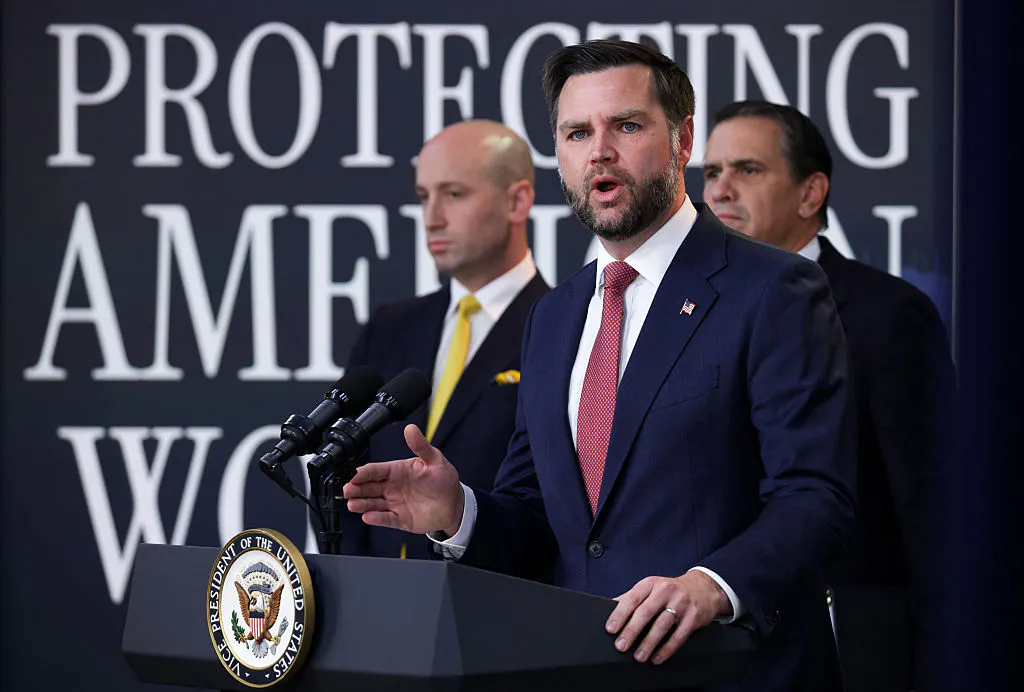
Dr. Oz Says Minnesota Fraud Coverup Reaches 'Highest Levels' Of State Government Authored by Jack Phillips and Jan Jekielek via The Epoch Times,Dr. Mehmet Oz, the administrator of the Centers for Medicare & Medicaid Services, revealed that health care fraud in Minnesota is more significant than previously known, according to his interview with EpochTV’s “American Thought Leaders,” premiering at 5 p.m. ET on Jan. 17.After speaking to whistleblowers across the state, Oz said there has been a “cover-up” for years and that it reaches the “highest levels” of state government.Oz made reference to Somalian Americans and Somalian nationals who have a significant presence in the Minneapolis-Twin Cities area, who have recently been accused by administration officials of engaging in the defrauding of federal government entitlement programs, including Medicaid.“For example, the Somalian sub-population, who have different cultural norms than the folks who have historically been in Minnesota, might be taking advantage of systems that were built for ‘Minnesota Nice’ people,” Oz said.“And this is what was told to me by people working in the Department of Health and Human Services there, from folks who are police, law enforcement, they were witnessing it.”The administration has gained “evidence now that we might be seeing that in other Somalian populations” in the United States, Oz said, adding that “they talk to each other.”“Once you figure out that no one’s watching the till, you begin to steal money in other areas,” he said. “In any case, we are aggressive on this.”Providing an example, Oz said that investigators in the Twin Cities discovered a building with “boarded-up windows” that allegedly had “400 businesses running out of there in the last couple of years that had generated about three $80 million in bills” for the federal government and Minnesota.“And these are all social service businesses. So as you start to probe into how this beehive of corruption arose, the question does come up, you know, who owns the building? Like, how did this even come about? The building owner would not let us go into the building,” he added.The state has been under the spotlight for years for Medicaid fraud, including a $300 million COVID-19-related fraud case involving the Feeding Our Future nonprofit.Federal prosecutors said it was the largest COVID-19-related fraud scheme in the United States, and that the defendants exploited a state-run, federally funded program meant to provide food for children.Since 2022, 57 people have been convicted, either by pleading guilty or by losing at trial. The majority of the defendants who were charged in the case are of Somali origin. Numerous other fraud cases are under investigation, including new allegations involving child care centers.Aside from the Medicare and Medicaid agencies, the Treasury Department also announced last week that it will investigate financial transactions between Minnesota residents and businesses in Somalia, as the government ramps up an operation targeting illegal immigration in the state.The Department of Homeland Security, too, has deployed thousands of agents to Minnesota as part of that broader federal effort, although protests have erupted in recent days over the shooting of a protester.The Trump administration said late last month it would freeze child care funds in Minnesota unless officials there provide more data about the programs, and in a January statement said it would freeze a program that allows states to pay child care providers without attendance requirements.A video that went viral on social media in December featured influencer Nick Shirley, who alleged significant daycare fraud involving the theft of state government funds. The clip was amplified and referenced by Vice President JD Vance and tech billionaire Elon Musk on X.Responding to the claims, Minnesota Gov. Tim Walz has been critical of the Trump administration’s efforts in his state while arguing that his office has already taken steps to reduce fraud.Meanwhile, the ongoing federal operations in Minneapolis are “a direct threat against the people of this state, who dared to vote against him three times, and who continue to stand up for freedom with courage and empathy and profound grace,” Walz said earlier this week.The Epoch Times contacted the governor’s office for comment on Jan. 16.Fraud Investigation ExpandingThe administration’s ongoing investigations into entitlement fraud are being expanded, namely in California, Oz told “American Thought Leaders.”“What we’re seeing in Minnesota is the tip of the iceberg, because it is dwarfed by what I saw in California, which is whole-scale cultural malfeasance around health care,” Oz said.“There is an acceptance that you need to be in the fraud business, especially in Los Angeles, and the magnitude of fraud there, we believe, is approximating $4 billion just in hospice and home health care.”Oz described Southern California’s situation as a pervasive “tolerance and acceptance of fraud” and that “it’s so rampant that you don’t even know how to get your arms around it.”“We have the unions being involved in some of these endeavors and lobbying as well” to get certain individuals elected, he added.U.S. Attorney's Office officials speak at a news conference inside the U.S. Courthouse in Minneapolis, detailing fraud in Minnesota, on Dec. 18, 2025. Kerem Yücel/Minnesota Public Radio via APOz said he believed foreign-based gangs were perpetrating fraud in hospice and home health care programs, but he did not provide detailed examples.The alleged fraud “might be part of a much larger scheme to change how we elect our officials, and that is very chilling for us to think that you might be using social programs designed to help all Americans who are struggling or who have vulnerabilities, using that as a tool to change who gets elected,” he said.Last week, Oz, along with First Assistant U.S. Attorney Bill Essayli, said at a news conference that federal officials will investigate allegations of fraud involving hospice centers in the state, describing the crimes as pervasive.Both Oz and Essayli suggested that foreign-based gangs were behind the fraud targeting hospice centers and home health care programs, while Oz elaborated on those claims on Friday by saying that a “Russian Armenian ... mafia” was targeting California’s health care systems.“These hospice programs are created when the most common reason that you enter it is cancer. But these days, not everyone with cancer dies, but also you put a lot of people with Alzheimer’s, other conditions, in there ... so it became a little harder to police whether people were going into hospice,” he said.A post from California Gov. Gavin Newsom’s press office account on X on Jan. 6 said that the state had stopped tens of billions of dollars in fraud, specifically unemployment fraud, and also criticized the Trump administration. Tyler DurdenSat, 01/17/2026 - 19:50

If Britain Bans X, How Far Will It Go To Block Free Speech?POLITICSSOURCE: ZEROHEDGE
3d ago

If Britain Bans X, How Far Will It Go To Block Free Speech?

If Britain Bans X, How Far Will It Go To Block Free Speech? Authored by Ted Newson via RealClearPolitics,In what appears to be a rolling back on free speech and citizen journalism, Britain is fast-tracking a law that will ban non-consensual intimate deepfake images. This is likely aimed at the social media site X.com after its AI assistant Grok allegedly generated inappropriate images. In the scope of the global news cycle and a further ban potentially on the table, the move couldn’t be more poorly timed. It coincides with social media bans in socialist Tanzania and a sweeping Internet blackout by the Ayatollah of Iran. While Britain is not Iran, the direction of travel – using information control to manage dissent – bears uncomfortable similarities. Brits are justifiably worried: Is this the nail in the coffin of Britain’s free speech?Keir Starmer, UK prime minister, has already come under an avalanche of scrutiny for his hand in other undemocratic activities. For example, many of the local elections in Britain will not go ahead this year, having also been canceled last year under the pretext of local government reorganization. Additionally, arrests over speech and social media posts have increased in recent years, with the arrests of over 10,000 people per year under various Orwellian laws.To make matters worse, Starmer’s online censorship has gone even further under the new Online Safety Act. This new law is intended to protect young people from “harmful” speech but gives regulators sweeping powers to silence lawful but unpopular speech in the name of safety. An example of the British government’s new stance on what is acceptable to discuss is a new taxpayer-funded online game. This game vilifies concerns over mass migration by giving the player a red extremism score, branding them as likely to be referred to the Prevent program, the UK anti-terror watchdog.The fact that victims of a foreign grooming gang investigation can be dismissed as “white trash” is a disgrace – made all the more striking as senior ministers simultaneously talk about banning the most pro-free-speech social media platform, where stories like this gain greater public consciousness.Just as the UK government has brought in these speech laws, the people have become aware that they are less free. Self-censorship and caution when speaking one’s mind are common, as individuals do not know the potential consequences of expressing their opinions. An opinion expressed by the Conservative Party or Reform Party could potentially create trouble or unnecessary harm if voiced by a civilian. Examples of this are easy to find, from Graham Linehan, who was arrested by armed police upon arriving in the UK from Arizona, to Deborah Anderson, an American cancer patient harassed by police in her own home in Britain over a post on X.Though we aren’t locked in the jaws of state tyranny yet, Britain’s parallels with the current situation in Iran are unmistakable. Just as the Iranian Revolutionary Guard Corps crack down on protest and switch off the Internet, Starmer is doing something similar for comparable reasons. It is a bad look to be constantly plagued by protest, which, as a fundamental right in a liberal society, serves to hold the government to account. While protests for a ban on X swirl online only so far, if the government were to do it, we would see freedom of speech advocates take to the streets too.Although Britain’s governing Labour Party swept to victory in 2024 with confident rhetoric, it is keenly aware that the result reflected voter fatigue with the previous Conservative government rather than a wholehearted endorsement of its own agenda. Platforms like X have since become essential democratic pressure valves – spaces where peaceful protest is organized, government failures are documented, and information ignored by legacy media circulates freely. That very openness makes X unsettling to any administration instinctively drawn to control. When a government seeks to tax what it can and regulate what it cannot direct, attempts to constrain such platforms should be read not as benign governance, but as an early warning sign. Efforts to suppress open digital discourse, whether in Britain or elsewhere, signal a deeper discomfort with accountability itself.A former human rights lawyer, the prime minister constantly points to international law as a beacon of what must prevail around the world. Meanwhile, at home, he simply cannot resist infringing on individual rights, replacing autonomy with bureaucracy. His demeanor now highlights the growing liberal class in Britain, which believes that the views of most hardworking British people are contemptible and that they know better. Just like Hillary Clinton and her infamous “basket of deplorables” comment, Starmer and the intolerant left he represents no longer believe in the democratic principles that built Britain.What Britain needs is total, not selective freedoms. America is far from perfect, but it has a public consciousness aware of its citizens’ right to liberty. Many in Britain remain unaware of the country’s sleepwalk toward authoritarianism, and voices across the West must resist the mainstreaming of government tyranny. Tyler DurdenSat, 01/17/2026 - 07:00

MAGA targets Brian Mast over AI chips regulationPOLITICSSOURCE: AXIOS
3d ago

MAGA targets Brian Mast over AI chips regulation

Top MAGA influencers, including Laura Loomer and David Sacks, are picking a public fight with a key GOP lawmaker over who should regulate the sale of AI chips to China.Why it matters: Legislation from House Foreign Affairs Chair Brian Mast (R-Fla.) isn't even out of committee. But the accusations are flying fast. "The AI Overwatch Act (H.R. 6875) may sound like a good idea, but when you examine it closely, it's pro-China sabotage disguised as oversight," Loomer said on X."Kill the bill," she said.Driving the news: Sacks, the president's top adviser on crypto and artificial intelligence, opened hostilities Thursday night by retweeting a post that suggested Mast's bill — the AI OVERWATCH Act — would undermine the president."Correct," Sacks posted on X.Mast fired back: "My job is not to be a yes-man to David Sacks or for [Nvidia CEO] Jensen Huang," Mast told Axios. "I will give the president the most sound advice that I can.""The Administration's critics are unintentionally promoting the interests of foreign competitors on U.S. entity lists--America should always want its industry to compete for vetted and approved commercial business, supporting real jobs for real Americans," Nvidia spokesperson John Rizzo told Axios. The intrigue: The fight appears to be expanding beyond X. "Brian Mast appears to be positioning himself as Huawei's Employee of the Month," a close White House ally told Axios, referencing the Chinese multinational that competes with Nvidia. "Does he really think it's a good idea to strip President Trump of his ability to conduct foreign policy and put it in the hands of whichever party is in control of Congress?" the ally asked.Mast made clear he's no fan of Huawei, telling Axios the chips are inferior. He said he's the one standing up to China.Zoom in: The most recent GOP fight over chips and AI burst into the open at a House hearing last week, where lawmakers questioned Trump's plan to allow Nvidia to sell its second-most powerful chips to China."They steal ‌so much intellectual property from this country but we don't have to sell it to them," Rep. Michael McCaul (R-Texas) said at the hearing.Zoom out: Rules and regulations governing AI have divided the Republican Party during Trump's second term.Last year, Sen. Ted Cruz (R-Texas) pushed for a moratorium on state-level AI regulations, aiming to create a federal "sandbox" that would allow AI companies to seek temporarily relaxed rules.But the amendment faced opposition from Sen. Marsha Blackburn (R-Tenn.) and was stripped from the budget bill by a 99–1 vote.Last month, Trump signed an executive order to override state AI laws, but many states have threatened to sue to block it from taking effect.The bottom line: Mast is bracing for a long fight. "The industry is going to do their best to intimidate," Mast told Axios. "They don't want anything to prevent them from selling chips to China."