

Gianforte unveils single ‘flat tax’ rate proposal ahead of 2027 Legislature
Tax policy debates center on growth versus redistribution as Americans weigh economic freedom.
A single 4. 7% income tax rate sounds tidy, almost soothing. Two brackets become one, everyone can do the math in their head, and the governor gets to say Montana is simpler and more competitive ahead of the 2027 Legislature.
New Republican Times Editorial Board
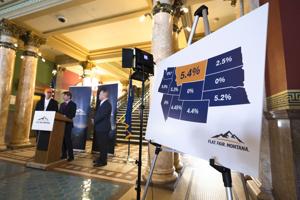
The governor’s plan would consolidate Montana’s two income tax rates into one, across-the-board rate of 4.7%. Critics say it won’t affect middle-class families.
Original source:
Read at The Montana StandardHow We See It
New Republican Times Editorial Board
A single 4.7% income tax rate sounds tidy, almost soothing. Two brackets become one, everyone can do the math in their head, and the governor gets to say Montana is simpler and more competitive ahead of the 2027 Legislature. We get why that sells. People are tired of tax codes that feel like a scavenger hunt, and we’d rather the state spend less time fine-tuning carveouts and more time minding the basics.
But the pitch only works if it’s honest about who actually benefits. Critics are saying middle-class families won’t feel much. That may be true depending on how the current brackets shake out, but “won’t feel much” can be read two ways: either the plan is mostly symbolic for regular households, or it’s a rearrangement that shifts the real gains elsewhere. If you’re going to call it a broad, across-the-board rate, then show it. Put the numbers on the table in plain English: a teacher in Billings, a couple running a small outfitter in Kalispell, a retiree pulling some income from savings. What happens to them, line by line?
We’re open to flattening rates, especially if it’s paired with a serious effort to keep spending from creeping up when revenue rises. That’s the part politicians love to skip. A flatter tax can be a clean deal for workers and entrepreneurs, but not if the state quietly treats it as a new normal and grows government anyway. The whole point is predictability, and the only way that matters is if Montanans can trust the state won’t come back in two years looking for “adjustments.”
If this is going to be a centerpiece heading into 2027, the governor should stop relying on vibes and start acting like it’s a real reform. Publish the distribution tables. Spell out what happens to revenue in a downturn. And if the middle class truly won’t notice, then explain why this is worth burning political capital on at all. Tax changes should be more than neat. They should be worth it.
Commentary written with AI assistance by the New Republican Times Editorial Board.