

House Passes Continuing Resolution to Fund Government Through Midterms, but There's a Catch
Conservative principles face implementation challenges as policy meets political complexity.
Mike Johnson says he's got the votes. He said that about a lot of things this year, and sometimes he did and sometimes the whip count turned out to be more of a suggestion. This time the House actually delivered, which counts for something in a Congress that's spent most of the year proving it can barely agree on lunch.
New Republican Times Editorial Board
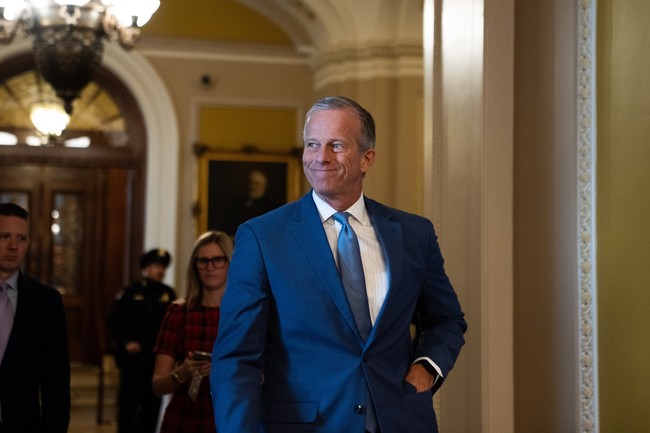
Speaker Mike Johnson said he has the votes to pass the rules on the spending bill to keep the government funded through the midterms. It also includes the SAVE America Act in the legislation, which could cause issues since enough Republicans in the Senate might block the bill (via Politico):
Original source:
Read at TownhallHow We See It
New Republican Times Editorial Board
Mike Johnson says he's got the votes. He said that about a lot of things this year, and sometimes he did and sometimes the whip count turned out to be more of a suggestion. This time the House actually delivered, which counts for something in a Congress that's spent most of the year proving it can barely agree on lunch. But the real story isn't the House vote. It's what Johnson tucked inside it.
Attaching the SAVE America Act to a continuing resolution is either a shrewd move or a self-inflicted wound, and right now nobody knows which. If you believe ballot integrity measures belong in every piece of must-pass legislation, fine, that's a defensible position. But funding the government through the midterms was supposed to be the easy part, the thing everyone agrees needs to happen regardless of what else is going on. Bundling in a fight that Senate Republicans themselves aren't unified on turns a routine vote into a hostage situation, and it's not clear who's holding the leverage.
That's the pattern with this Congress. Nothing gets to be simple. Keeping the lights on becomes a vehicle for whatever priority is politically convenient that week, and then everyone acts surprised when the bill stalls in the other chamber. If Senate Republicans really do block this, Johnson will have spent political capital on a bill that never had a real path, and Democrats get to spend the next month saying the GOP shut down the government over an election bill nobody asked to combine with funding. Maybe that's worth it. But somebody in that conference should have to explain why the two fights got married in the first place, instead of running side by side where each could actually win on its own merits.
Commentary written with AI assistance by the New Republican Times Editorial Board.