

Jeffries dismisses friction in Democratic caucus over Israel aid vote
Progressive policy ambitions meet practical realities as Americans weigh costs and consequences.
Hakeem Jeffries stood in front of reporters and basically said "nothing to see here" about a vote that split his own caucus down the middle on aid to Israel. That's not spin, that's just not describing what happened. When a Republican offers an amendment and Democrats end up scattered all over the map on whether America's closest Middle East ally should keep getting $3 billion, that's not friction.
New Republican Times Editorial Board
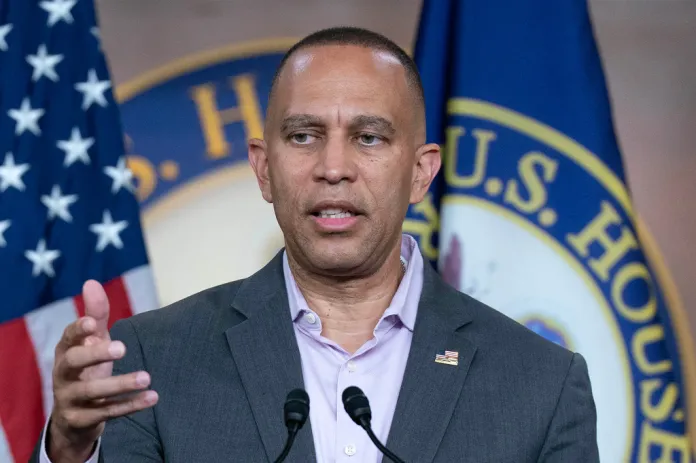
House Minority Leader Hakeem Jeffries (D-NY) denied there are tensions within the Democratic caucus over an amendment to cut U.S. monetary support for Israel. House Democrats were divided during a vote on Wednesday to cut $3 billion in foreign aid to Israel in an annual appropriations bill through an amendment offered by Rep.
Thomas Massie […]
Original source:
Read at Washington ExaminerHow We See It
New Republican Times Editorial Board
Hakeem Jeffries stood in front of reporters and basically said "nothing to see here" about a vote that split his own caucus down the middle on aid to Israel. That's not spin, that's just not describing what happened. When a Republican offers an amendment and Democrats end up scattered all over the map on whether America's closest Middle East ally should keep getting $3 billion, that's not friction. That's a fault line.
The interesting part isn't even the vote count. It's the instinct to paper over it. Jeffries has spent years positioning himself as the guy who can hold together a coalition that runs from Squad progressives to Blue Dog moderates, and denying an obvious split is the tell that the coalition is harder to hold than he lets on. Voters can watch a roll call. They don't need Jeffries to interpret it for them, and when the interpretation contradicts the tape, it just looks like management, not leadership.
We'd have more respect for a "yes, we disagree, here's why" than a flat denial. Massie, of all people, forced a real question onto the floor, and instead of Democrats having an actual debate about it in public, their leader tried to shrink it back down to nothing. That's the pattern lately: when the party has an honest disagreement about Israel, the response from leadership isn't to make the case, it's to insist there was never a disagreement at all.
Commentary written with AI assistance by the New Republican Times Editorial Board.