

Judge blocks OMB from retroactively cutting grants based on new rules
This story raises questions about governance, accountability, and American values.
A federal judge in Boston just told the Office of Management and Budget it can't rewrite the terms of a grant after the money's already been promised and, in many cases, already spent on staff and programs. That's not some abstract separation-of-powers riddle. It's a landlord trying to change the lease after the tenant moved in.
New Republican Times Editorial Board
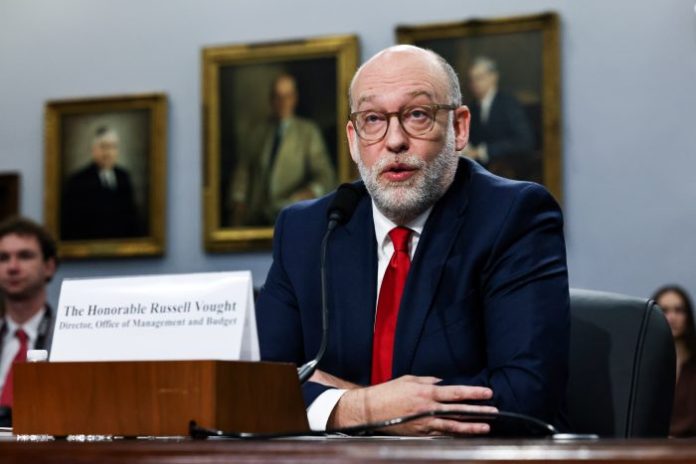
A federal judge in Boston on Friday blocked the Office of Management and Budget from using an obscure grant termination clause to revoke billions of dollars in federal funding based on shifting agency priorities.
U.S. District Judge Indira Talwani, an appointee of former President Barack Obama, denied the Trump administration’s request to dismiss a lawsuit […]
Original source:
Read at Washington ExaminerHow We See It
New Republican Times Editorial Board
A federal judge in Boston just told the Office of Management and Budget it can't rewrite the terms of a grant after the money's already been promised and, in many cases, already spent on staff and programs. That's not some abstract separation-of-powers riddle. It's a landlord trying to change the lease after the tenant moved in.
We get the impulse behind it. There's a lot of federal money out there funding things that don't match this administration's priorities, and elections are supposed to mean something when it comes to how the government spends. But the tool matters. An "obscure grant termination clause" letting an agency claw back billions based on priorities that shifted after the money went out isn't policy, it's a loophole being stretched past its purpose. If the administration wants to end programs it doesn't like, that's what budgets, appropriations fights, and Congress are for.
It's also worth noting who's making this call. Judge Talwani is an Obama appointee, and skeptics will say this is just another judicial roadblock dressed up as procedure. Fair point to raise. But the ruling isn't blocking the administration from setting new priorities going forward. It's blocking retroactive punishment of grantees who followed the rules as written when they signed up. That's a distinction conservatives ought to care about, because the next administration that tries this trick might not be one we like either.
If OMB wants the authority to yank funding on a dime when priorities change, it should ask Congress to write that authority clearly instead of leaning on a clause nobody thought would be used this way. Governing by surprise memo isn't discipline. It's just chaos with better paperwork.
Commentary written with AI assistance by the New Republican Times Editorial Board.