Justice Alito Says COVID-19 Response Subjected Americans’
This story raises questions about governance, accountability, and American values.
Samuel Alito didn’t wander onto Fox News Sunday to relitigate mask mandates. He came to make a point that Washington spent two years trying to bury: the Constitution doesn’t take a sick day. His new book digs into how America’s COVID response treated the Bill of Rights like a suggestion.
New Republican Times Editorial Board
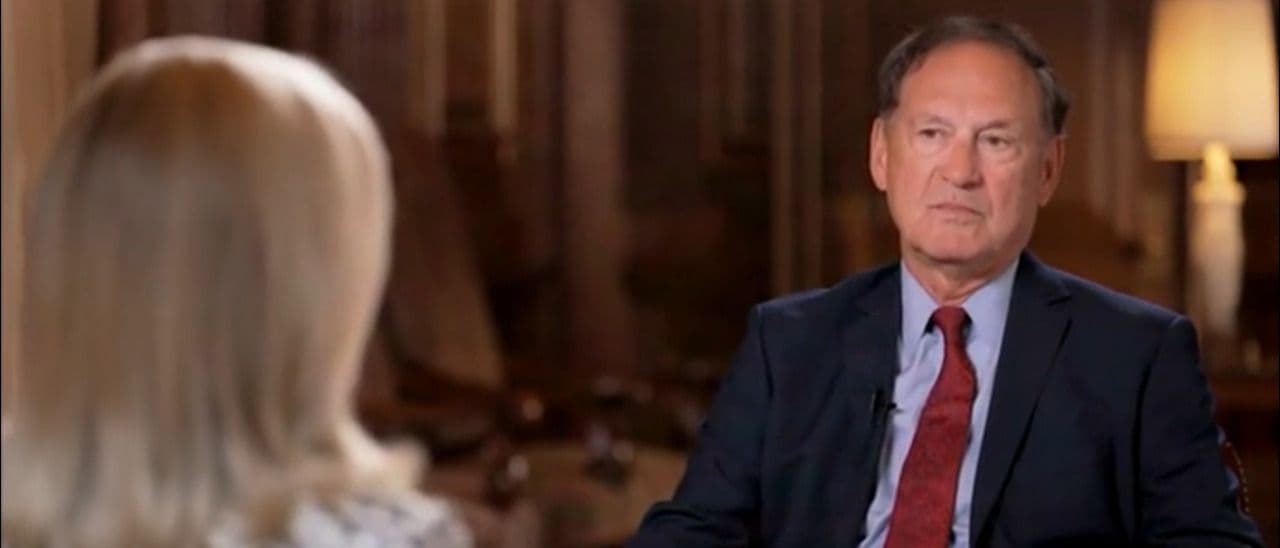
Supreme Court Associate Justice Samuel Alito, joining Fox News for an interview, reflected on the risks certain responses to the COVID-19 pandemic posed to the rights guaranteed to Americans by the United States Constitution.
In preparation for the Oct. 6 release of his new book, “So Ordered: An Originalist’s View of the Constitution, the Court, and Our Country,” Alito spoke with “Fox News Sunday” host Shannon Bream to discuss some of the cases in his career and the application of his jurisprudence.
During the interview, Bream asked Alito about a Nov. 12, 2020, speech he delivered virtually to the Federalist Society National Lawyers Convention. The conservative appointee of former President George W.
Bush had criticized the COVID-19 pandemic restrictions for resulting in “previously unimaginable restrictions on individual liberty.” While cautioning he was neither diminishing the virus’s real threat to public health nor determining if the restrictions “represent good public policy,” Alito stated it was an “indisputable statement of fact” that “we have never before seen restrictions as severe, extensive and prolonged as those experienced for most of 2020.” He had also characterized the restrictions as a “constitutional stress test.” Critics accused Alito of being too partisan in his remarks.
In response to Bream’s question, the 76-year-old Alito doubled down and said the pandemic was a “stress test” of Americans’ constitutional rights. “I think it was a stress test of our constitutional rights,” Alito said during the interview. “It put our loyalty to those constitutional rights, our dedication to those constitutional rights, to the test.” “One of the things that, unfortunately, it disclosed was that many people were willing to downgrade certain constitutional rights: the right to freedom of speech and the right to the free exercise of religion,” Alito reflected. “In particular, they were willing to make those secondary to other things.” The case Bream referenced, Calvary Chapel Dayton Valley v.
Steve Sisolak, Governor of Nevada, et al., resulted in the high court voting 5-4 to deny an emergency injunction request by the defendant, a rural Nevada church. The church’s case argued Democratic Nevada Gov.
Steve Sisolak’s order limiting the number of people who could come to worship services to 50 was a direct violation of their freedom of religion. “I have spent countless hours praying on this myself and talking to faith leaders,” Sisolak had said during an April 2020 press conference, according to the Reno Gazette Journal. “My primary purpose is to keep people alive and stop the spread of this disease.
Alito issued a dissenting opinion pointing out the apparent hypocrisy of the Nevada state government, who closed down churches that violated pandemic lockdown regulations, yet allowed secular businesses like casinos, restaurants, and gyms to operate at 50% fire-code capacity. “The example of the casinos, I thought, was telling, and the governor of Nevada at that time said the casinos are open,” Alito said. “And so people came back to Las Vegas, and there were pictures of people in the casinos, and they were not wearing masks but at the same time, the state had a very severe limit on the number of people who could attend a house of worship, no matter how big that house of worship was.”
Original source:
Read at Daily CallerHow We See It
New Republican Times Editorial Board
Samuel Alito didn’t wander onto Fox News Sunday to relitigate mask mandates. He came to make a point that Washington spent two years trying to bury: the Constitution doesn’t take a sick day. His new book digs into how America’s COVID response treated the Bill of Rights like a suggestion. Churches closed. Synagogues shuttered. Entire livelihoods shut down on the stroke of a governor’s pen. And when citizens pushed back, judges far too often looked the other way.
What stuck with us is Alito’s tone. No fury, no doom. Just a calm, matter-of-fact warning that emergency powers have a way of outliving the emergency. He’s right. The same people who demanded lockdowns now want to forget they ever happened, but the precedent remains sitting there, ready for the next crisis. That’s not a theoretical worry. It’s a warning for the next time someone in power decides that expediency trumps the rules.
The reaction from the left was predictable. They waved off Alito as a partisan relic, but that’s the giveaway. The man was warning about government overreach, and the response was to attack the messenger. That tells you how little regard too many in positions of influence actually have for the liberties they claim to defend. He said out loud what millions of Americans lived through — the feeling that their most basic rights were provisional, granted only as long as officials said so.
We’d encourage anyone to read what he’s writing, even if you start with the Sunday interview. It’s a reminder that the Constitution is not a menu to cherry-pick from in rough times. Alito’s not asking for applause. He’s asking for a culture that remembers why we have these limits in the first place. That’s a lesson worth paying attention to, especially from a man who spent the last few years watching them get swept aside.
Commentary written with AI assistance by the New Republican Times Editorial Board.