

Source report & NRT opinion
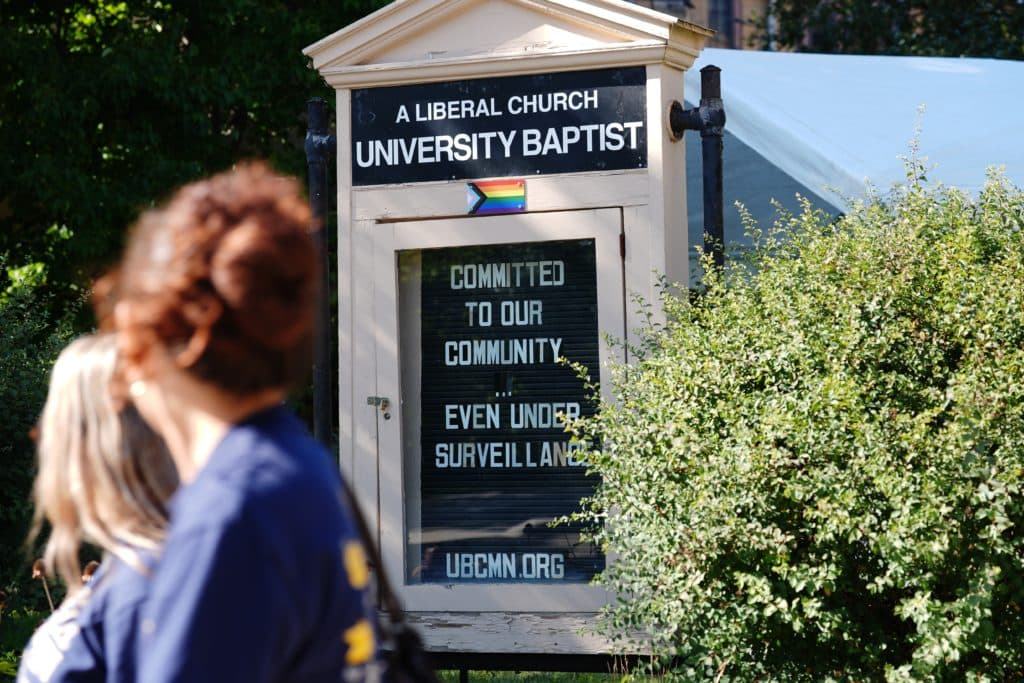
Minnesota churches roiled by legal battle over ICE surveillance and right to protest
Based on reporting by Pbs.
Source preview
Court cases involving Twin Cities churches and immigration enforcement highlight how the acrimonious debate continues to roil faith communities more than six months since the federal surge turned Minnesota into a symbol of defiance of the Trump administration's policies.
This archive entry has not yet been converted into a full NRT brief. Read the original report for its complete context and responses.
NRT commentary
How We See It
It says something that the legal battle in the Twin Cities isn’t about whether churches can preach. It’s about whether they can run a logistical operation to keep federal agents from doing their jobs. Six months after the immigration enforcement surge turned Minnesota into a symbol of resistance, the churches involved are now asking courts to bless tactics that would make ICE surveillance all but impossible. That is not a religious liberty question. That is a political strategy dressed up in vestments.
Some congregations are genuinely torn. We don’t doubt that. But the pastors and leaders driving this fight have made a clear choice: they prefer the adrenaline of defiance over the quiet work of ministry. When a church invites federal agents to be monitored, when it coordinates protest networks to jam up enforcement, it has stopped being a sanctuary and started being a staging ground. That might feel righteous to the congregation. It looks like obstruction to everyone else.
The "right to protest" is real. Peaceful demonstration is part of the American tradition, and no one is arguing otherwise. But there is a difference between holding a sign on a sidewalk and using church property as a legal shield for people the government has lawfully ordered removed. ICE agents aren’t wandering into sanctuaries for sport. They are following leads and warrants. Churches don't get a religious exemption from the law just because they disagree with it. That’s not persecution. That’s accountability.
If these church leaders want to change immigration policy, they have every right to lobby Congress, to write op-eds, to vote. What they can’t do is turn their pews into a jurisdiction that federal law doesn’t reach. Minnesota proved it could be a flashpoint. The question now is whether its churches want to be remembered for defending their faith or for resisting the law under the cover of it. We think the answer should be simpler than they’re making it..
Commentary uses AI assistance. Read about our automated checks or report a correction.