

Nikkei sinks 3.5% as it follows Friday's US rout, South Korea battered
This story raises questions about governance, accountability, and American values.
The coverage treats today’s selloff like a mood swing, soothed by a few “deal is close” headlines. That framing misses what investors are actually pricing: fragile confidence in a world where geopolitical shocks and policy uncertainty arrive faster than earnings reports. Markets do not tumble because traders suddenly got dramatic.
New Republican Times Editorial Board
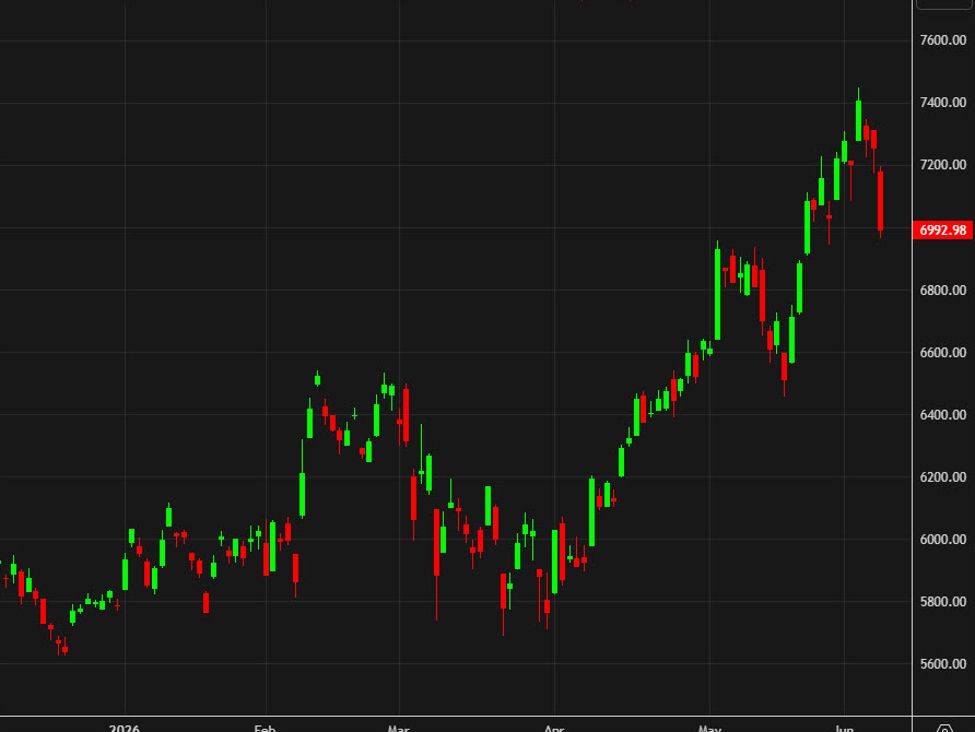
Japanese stock markets are getting battered today but there are better signs trickling out of the US. The Nikkei is trading down 3.5% following a 4.2% rout in the Nasdaq Composite on Friday. I'd expect to see pain around the globe today as the rest of the world plays catch up.
There are some better signs beginning to appear in the USA though. S&P 500 futures opened 0.6% lower but Trump has been on a media tour today highlighting that he's asked Israel not to strike back on Iran and saying a deal is close.
Futures are now up 0.2%. To be completely fair, he's said the same thing almost every day for the past five weeks. Still, the market has bought those headlines almost every time for five weeks so I guess that's no reason to fight it now.
From my perspective, he sounded determined to make ...
Original source:
Read at ForexliveHow We See It
New Republican Times Editorial Board
The coverage treats today’s selloff like a mood swing, soothed by a few “deal is close” headlines. That framing misses what investors are actually pricing: fragile confidence in a world where geopolitical shocks and policy uncertainty arrive faster than earnings reports.
Markets do not tumble because traders suddenly got dramatic. They tumble when risk is mispriced, when leverage meets reality, and when global supply chains are one drone strike away from disruption. The focus on whether Trump repeats himself also dodges the bigger point: energy security and deterrence move indices more than pundit snark.
Conservatives should care less about day-to-day tape action and more about public trust in institutions and predictable rules. Stability comes from credible diplomacy, resilient domestic production, and regulators who stop subsidizing bubbles.
In the end, the principle is simple: national strength is economic strength, and markets cannot outtrade weak fundamentals forever.
Commentary written with AI assistance by the New Republican Times Editorial Board.