

Trump salutes 'great heroes' as he attends dignified transfer of US service members killed in Jordan, Iraq
This story raises questions about governance, accountability, and American values.
Four flag-draped cases coming off a plane at Dover is the moment that should end every argument about whether foreign policy is an abstraction. It isn't. It's families standing on a tarmac waiting for a casket.
New Republican Times Editorial Board
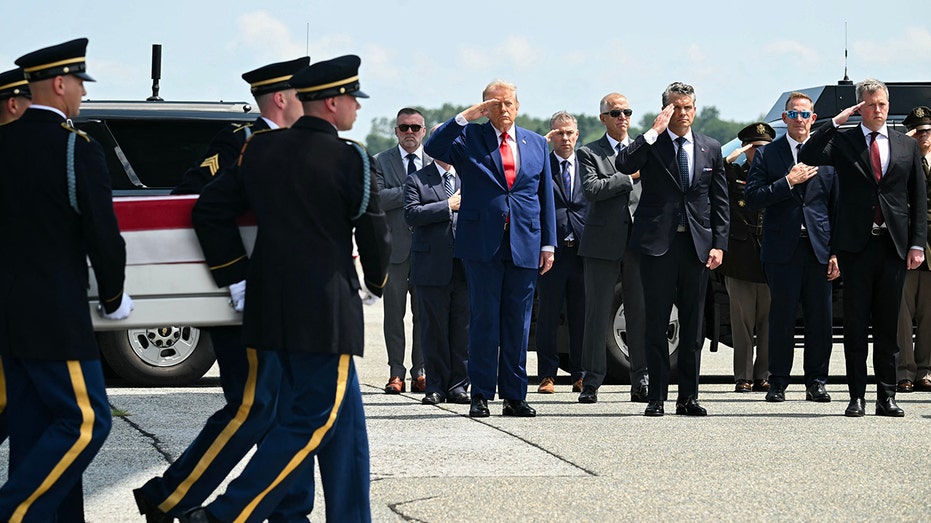
President Donald Trump said ahead of a dignified transfer ceremony that the four U.S. service members killed in action overseas were "great heroes."
Original source:
Read at Fox NewsHow We See It
New Republican Times Editorial Board
Four flag-draped cases coming off a plane at Dover is the moment that should end every argument about whether foreign policy is an abstraction. It isn't. It's families standing on a tarmac waiting for a casket. The president showing up for that, saying the plain word "heroes" and meaning it, is the bare minimum of the job, and it's worth noting when a president actually does the bare minimum instead of phoning it in from a podium somewhere else.
What strikes us is how routine this has become. Service members killed in Jordan, killed in Iraq, and half the country barely blinks because we've been running military operations across the Middle East for so long that the casualties barely register as news anymore. That numbness is the real story here, more than any single ceremony. Four families just had their lives permanently rearranged, and it happened in a part of the world where American troops have been quietly absorbing risk for two decades under three or four different administrations.
We don't say that to score points off this specific tragedy. We say it because "great heroes" should come with an obligation attached, not just a photo op. If these men and women are dying to protect something, the country deserves a straight answer about what that something is and whether the mission still makes sense. Too often the ceremony gets the solemnity and the policy behind it gets none of the scrutiny.
Honoring the dead is right and Trump was right to be there. But honoring them fully means asking harder questions about why American troops keep ending up in these positions in the first place, and whether Washington actually has a plan or just a rotation schedule.
Commentary written with AI assistance by the New Republican Times Editorial Board.