

Trump’s Break With South Korea Projects Weakness In The Pacific
This story raises questions about governance, accountability, and American values.
Reducing joint exercises with Seoul is the kind of move that sounds like a cost-saving footnote until you remember what those drills actually do. They keep pilots sharp, keep command structures synced, and keep North Korea guessing. You don't pause that because it's expensive to run.
New Republican Times Editorial Board
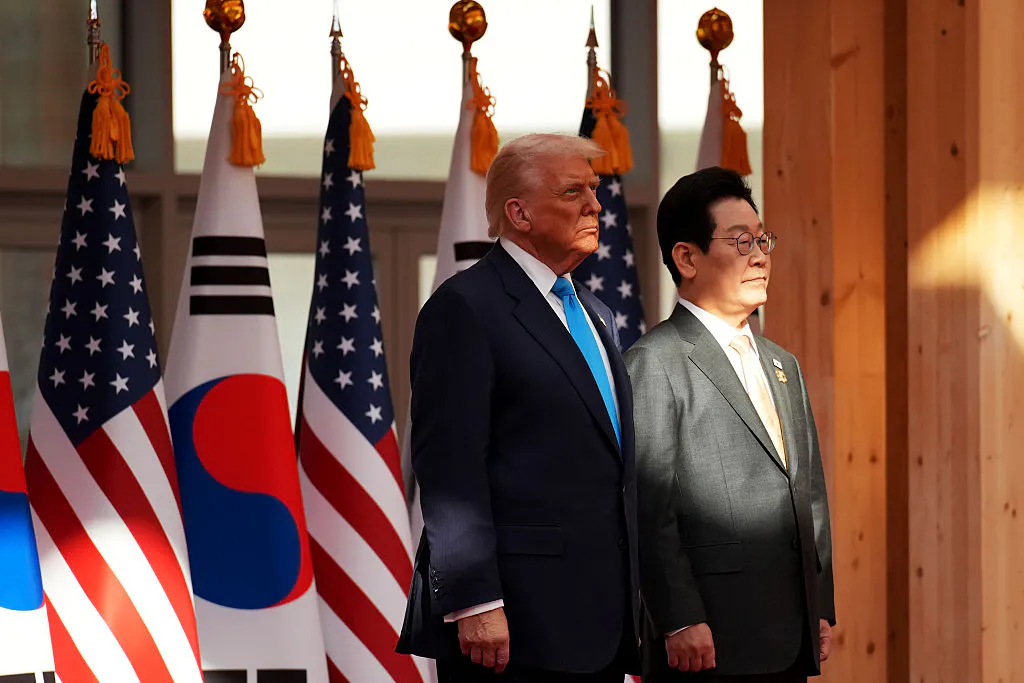
Confusing adversaries and allies is a basic foreign policy mistake. Leveraging enemies to attack friends is a deeper failure. President Trump committed both errors on Sunday when he announced that he was ordering the Pentagon to “substantially reduce the Joint Military Exercises” with South Korea.
According to his post on social media, the president’s justifications
Original source:
Read at Daily WireHow We See It
New Republican Times Editorial Board
Reducing joint exercises with Seoul is the kind of move that sounds like a cost-saving footnote until you remember what those drills actually do. They keep pilots sharp, keep command structures synced, and keep North Korea guessing. You don't pause that because it's expensive to run. You pause it because you want to signal something, and the something here is not reassuring.
The bigger problem is the framing. If the justification for scaling back with an ally leans on complaints better aimed at an adversary, that's not toughness, that's confusion about who's who. South Korea has spent decades building the kind of interoperability with American forces that took real money and real trust to establish. You don't rebuild that overnight if Pyongyang or Beijing decides to test the gap. Allies watch what we do far more than what we say, and Tokyo, Manila, and Canberra are all taking notes right now.
None of this means South Korea deserves a blank check, or that burden-sharing arguments are illegitimate. They're not. Seoul can and should pay more into its own defense, and past administrations have been too polite to push that case hard. But there's a difference between demanding more from an ally and pulling back the readiness that deters a regime that starves its own people to fund missile tests. Weakness dressed up as leverage is still weakness, and North Korea and China will read it exactly that way.
Commentary written with AI assistance by the New Republican Times Editorial Board.