
NRT briefing
Anti-government protesters battle with police in Albania
Based on reporting by BBC News.
The Brief
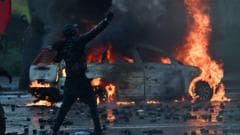
Anti-government protesters battled riot police in central Tirana on Saturday for a fifth consecutive day, with masked demonstrators, many of them students, throwing rocks and petrol bombs at officers defending the education ministry. Police responded with water cannon, tear gas, and, for the first time, reportedly rubber bullets.
The protests, which began in early June over corruption allegations against Prime Minister Edi Rama's administration, have grown into a broader anti-government movement, with crowds swelling to larger numbers than on previous days as the focus shifted to Rama's office.
Officials say 80 people have been charged with disorder, hundreds more have been arrested or are under investigation, and many have been injured on both sides.
The prime minister, in a social media post, blamed the opposition Democratic Party and what he called "the sinister agenda of foreign actors" for the unrest, without specifying which actors. Meanwhile, the special prosecution service, established under EU and US pressure, has arrested the secret service chief, Vlora Hyseni, who is accused of helping a businessman and friend of Rama, Ergys Agasi, evade justice.
Agasi has denied the allegations; Rama denies any knowledge of illegal transactions. Political analyst Lutfi Dervishi told the BBC that Rama is "caught between a rock and a hard place," having concentrated power and become the sole focus of public grievances.
Rama's Socialist Party holds 83 of 140 parliamentary seats, with elections not due until 2029.
NRT commentary
How We See It
The scenes from Tirana are a stark reminder that stability in the Western Balkans is more fragile than the glossy narratives of EU integration suggest. Prime Minister Edi Rama, long hailed by Brussels as a reformer, now faces the consequences of a political system that concentrates power and tolerates corruption at its highest levels.
The protesters' anger, directed at "the whole corrupt political class," reflects a deeper disillusionment that transcends party lines.
For conservatives, the situation underscores the importance of strong institutions and the rule of law over charismatic leadership. Rama's dismissal of the unrest as the work of foreign actors echoes a familiar authoritarian trope, one that should concern Western allies.
The EU, which Albania aspires to join, must ask itself whether its accession process is genuinely fostering democratic accountability or merely cosseting a leader who has promised membership by 2030 while cracking down on dissent. The protests, and the government's heavy-handed response, should serve as a wake-up call that stability purchased through complacency is not stability at all.
Commentary uses AI assistance. What is How We See It? Read about our automated checks or report a correction.