

Can Democrats Have A Sister Souljah Sequel?
Progressive policy ambitions meet practical realities as Americans weigh costs and consequences.
Thirty years is a long time to go without a sequel. Bill Clinton didn't just sign welfare reform in 1996, he'd already done the harder thing four years earlier when he stood up at Jesse Jackson's Rainbow Coalition and called out Sister Souljah by name for talking about killing white people. That moment wasn't an accident.
New Republican Times Editorial Board
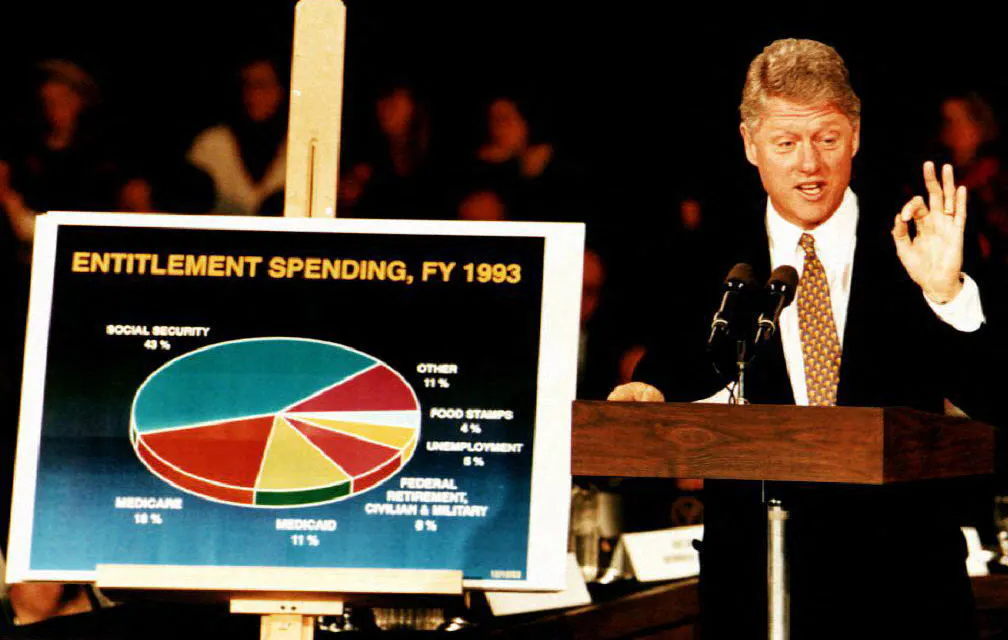
This piece is part of MI x DW, a collaboration that brings Daily Wire readers exclusive commentary and research from the Manhattan Institute’s world-class team of scholars. *** This summer marks 30 years since President Bill Clinton signed the landmark 1996 welfare reform into law.
His successors in today’s Democratic Party will commemorate the event
Original source:
Read at Daily WireHow We See It
New Republican Times Editorial Board
Thirty years is a long time to go without a sequel. Bill Clinton didn't just sign welfare reform in 1996, he'd already done the harder thing four years earlier when he stood up at Jesse Jackson's Rainbow Coalition and called out Sister Souljah by name for talking about killing white people. That moment wasn't an accident. It was a calculated signal to the country that the Democratic Party had limits, that it wasn't going to be held hostage by its loudest fringe. Welfare reform followed the same logic: take an issue where the party was seen as captured by an activist class, and prove otherwise.
Try to imagine that happening today. Name a Democrat with the standing and the nerve to publicly break with an interest group inside the coalition, not on some symbolic gesture but on substance, the way Clinton broke with the AFDC status quo. The exercise gets awkward fast, because the party's current model runs the other direction. Primaries get won by outflanking rivals from the left, not by picking fights with the base. The activist wing controls too much of the money, the messaging apparatus, and the primary electorate for a "moment" like that to survive the backlash it would invite.
That's not a small thing. Clinton's willingness to pick that fight is exactly what made him credible to voters who otherwise had no reason to trust his party on crime, welfare, or culture. It bought him room to govern from the center and win twice. Without something like it, Democrats keep running into the same wall: a base that punishes moderation and a general electorate that keeps punishing the lack of it. Nostalgia for the moment isn't the same as being able to reproduce it, and right now nobody in that party seems able to.
Commentary written with AI assistance by the New Republican Times Editorial Board.