

Conservative group asks appeals court to strike down Delaware’s campaign donor disclosure law
Constitutional questions test judicial philosophy as Americans debate the role of unelected judges.
Delaware wants a list of every donor who backs a group that so much as mentions a candidate in that state, and a conservative outfit is now telling a federal appeals court that's exactly the kind of law the First Amendment was written to stop. Good. Somebody should.
New Republican Times Editorial Board
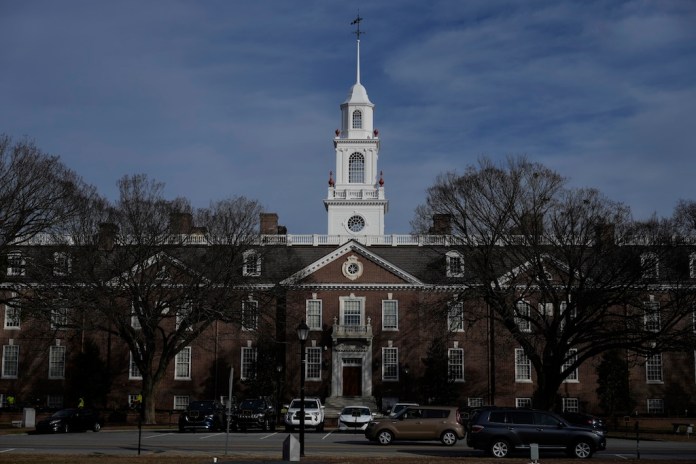
A conservative political group asked a federal appeals court on Monday to strike down a Delaware law requiring the disclosure of donors for groups that campaign in the state, hoping it becomes the latest donor disclosure and campaign finance law to be struck down as a violation of the First Amendment.
A three-judge panel on […]
Original source:
Read at Washington ExaminerHow We See It
New Republican Times Editorial Board
Delaware wants a list of every donor who backs a group that so much as mentions a candidate in that state, and a conservative outfit is now telling a federal appeals court that's exactly the kind of law the First Amendment was written to stop. Good. Somebody should.
Donor disclosure sounds harmless when you say it fast. Transparency, accountability, all the warm words. But in practice these laws have become a favorite tool for exposing people who give money to unpopular causes to boycotts, harassment, and worse, and everyone in this fight knows it. Delaware isn't asking for disclosure because voters are clamoring to know who funded a mailer about a state senate race. It's asking because knowing who gave lets you go after them, and plenty of state officials have been perfectly candid about wanting that leverage.
The Supreme Court has already said as much in the NAACP v. Alabama line of cases and reaffirmed it more recently in the Americans for Prosperity decision striking down California's donor disclosure scheme. Compelled disclosure chills speech, and it chills it selectively, against whoever the current political mood has decided deserves exposure. That's not an abstraction in this case. It's the whole reason the group filed suit.
If Delaware wants to regulate actual coordination between donors and candidates, fine, that's a different law with different justifications. But a blanket rule that turns every donor list into a public document, available to anyone with a grudge, isn't disclosure. It's a warning label telling people not to give.
Commentary written with AI assistance by the New Republican Times Editorial Board.