

'Did Fauci Partially Waive His Fifth Amendment Rights?' This Reporter Cited a Familiar Case
Conservative principles face implementation challenges as policy meets political complexity.
There’s something almost comic about watching a man who spent years lecturing the country on trusting the science suddenly get cagey about his own conduct. Fauci sat in front of the Senate Homeland Security Committee and, depending on the question, either answered at length or clammed up and reached for the Fifth Amendment. That inconsistency is exactly what got a legal reporter digging into old case law, because there's a real doctrine here: once you start answering questions about a subject, you can lose the right to go silent on the parts that make you look bad.
New Republican Times Editorial Board
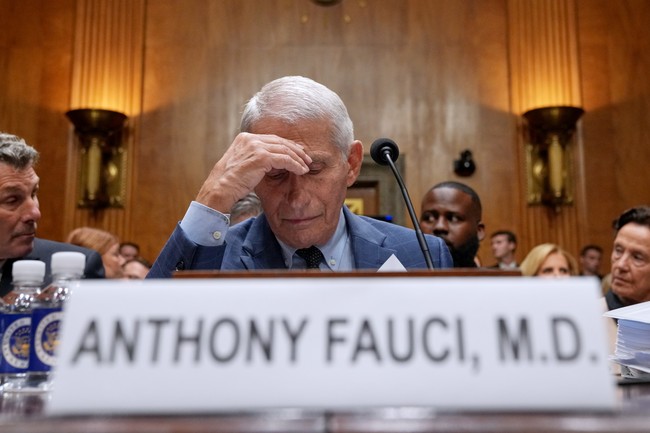
We know why former Director of National Intelligence Tulsi Gabbard felt sick watching Dr. Anthony Fauci last Wednesday, when he was skinned alive by Senate Republicans over his handling of the COVID pandemic.
Fauci’s hearing before the Senate Homeland Security and Governmental Affairs Committee was a spectacle, one where we finally saw this egotistical little elf get chopped down at the knees.
Original source:
Read at TownhallHow We See It
New Republican Times Editorial Board
There’s something almost comic about watching a man who spent years lecturing the country on trusting the science suddenly get cagey about his own conduct. Fauci sat in front of the Senate Homeland Security Committee and, depending on the question, either answered at length or clammed up and reached for the Fifth Amendment. That inconsistency is exactly what got a legal reporter digging into old case law, because there's a real doctrine here: once you start answering questions about a subject, you can lose the right to go silent on the parts that make you look bad. Courts have wrestled with that exact scenario for decades, and the fact that anyone had to research it live during a Fauci hearing tells you everything about how this man handles accountability.
He wasn't dragged in front of cameras to talk about virology. He was there to explain gain-of-function funding, the origins of a virus that killed over a million Americans, and years of shifting public guidance that cost people their jobs, their businesses, and their trust in institutions. Answering the easy stuff while invoking constitutional protection on the hard stuff isn't caution, it's strategy. And it's the kind of strategy that only works if nobody in the room is paying close enough attention to call it out.
Senate Republicans did call it out, and good for them. For years Fauci operated as though he were above the kind of scrutiny every other government official has to survive. He wasn't elected, he wasn't easily fired, and for a long stretch he wasn't meaningfully questioned either. Watching him squirm under pointed cross-examination isn't schadenfreude for its own sake. It's what oversight is supposed to look like when it actually happens instead of getting waved off as partisan theater.
The bigger question the reporter's dig into precedent raises is whether Fauci's lawyers know something the rest of us don't about what selective silence might expose. Maybe it's nothing. But after years of confident, unequivocal statements to the American public, the sudden pivot to legal hedging speaks for itself.
Commentary written with AI assistance by the New Republican Times Editorial Board.