

Guess Who Abdul El-Sayed Blames for Islamic Terrorism
This story raises questions about governance, accountability, and American values.
Abdul El-Sayed wants you to believe Islamic terrorism is basically a downstream effect of American foreign policy, colonialism, or whatever grievance happens to be trending that week. It's a tidy story. It's also about two hundred years too late to hold up, and the receipts have been sitting in the National Archives the whole time.
New Republican Times Editorial Board
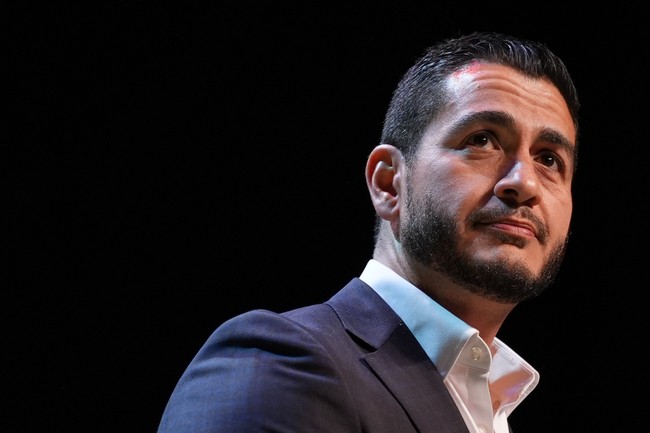
Islamic terrorism has been a problem for ages. Going back centuries, Islamic factions have engaged in behavior that fits the modern-day definition of terrorism. This predates the founding of America, and shortly after American independence, the Barbary States (Tripoli, Algiers, Tunis, Morocco) attacked and seized American ships.
Envoy Thomas Jefferson and John Adams met with Ambassador Sidi Haji Abdrahaman. In a report to Secretary of State John Jay, Jefferson and Adams said, "The ambassador answered us that [the right] was founded on the Laws of the Prophet, that it was written in their Koran, that all nations who should not have answered their authority were sinners, that it was their right and duty to make war upon them wherever they could be found, and to make slaves of all they could ...
Original source:
Read at TownhallHow We See It
New Republican Times Editorial Board
Abdul El-Sayed wants you to believe Islamic terrorism is basically a downstream effect of American foreign policy, colonialism, or whatever grievance happens to be trending that week. It's a tidy story. It's also about two hundred years too late to hold up, and the receipts have been sitting in the National Archives the whole time.
Go back and read what Jefferson and Adams actually wrote after meeting with the Tripolitan ambassador in 1786. This wasn't a dispute over drone strikes or occupation. There was no CIA yet, no Israel, no oil pipelines to fight over. The ambassador told them plainly that attacking American ships and enslaving American sailors was a religious right, drawn straight from the Koran, owed to any nation that hadn't submitted to their authority. That's not a grievance narrative. That's a stated theological justification, on the record, from the 18th century.
We're not saying every Muslim nation or every Muslim believes this, and nobody serious argues that. But pretending the ideological roots of Islamic terrorism only sprouted after some American misstep in the last fifty years requires ignoring documented history that predates the republic itself. El-Sayed's framing isn't analysis, it's absolution dressed up as nuance.
If you want to have an honest conversation about terrorism, you have to start with what people who commit it actually say about why they're doing it, not with the explanation that's most flattering to a particular political narrative. Jefferson and Adams took the ambassador at his word. Maybe we should too.
Commentary written with AI assistance by the New Republican Times Editorial Board.