

House GOP campaign arm launches first coordinated ad since Supreme Court ruling on party expenditures
Constitutional questions test judicial philosophy as Americans debate the role of unelected judges.
So the NRCC finally used the tool the Supreme Court handed it, and of all the candidates it could have picked to test-drive coordinated spending, it went with Rob Bresnahan. That's a choice. A first-term Pennsylvania Republican who's already spent months answering questions about his stock trades isn't exactly the poster child you'd pick if the goal were a clean rollout.
New Republican Times Editorial Board
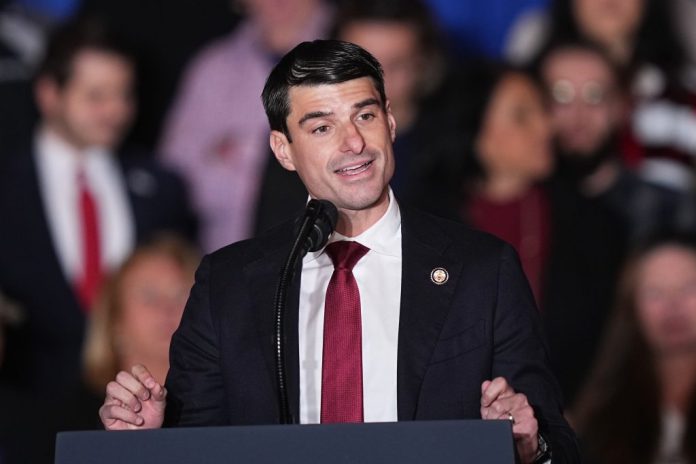
The National Republican Congressional Committee on Wednesday launched its first joint ad campaign with a GOP candidate, months after a Supreme Court ruling lifted caps on coordinated party spending. The ad campaign, in conjunction with vulnerable Rep.
Rob Bresnahan (R-PA), features two ads boosting the first-term lawmaker. Bresnahan, who faced scrutiny over stock trades made […]
Original source:
Read at Washington ExaminerHow We See It
New Republican Times Editorial Board
So the NRCC finally used the tool the Supreme Court handed it, and of all the candidates it could have picked to test-drive coordinated spending, it went with Rob Bresnahan. That's a choice. A first-term Pennsylvania Republican who's already spent months answering questions about his stock trades isn't exactly the poster child you'd pick if the goal were a clean rollout. It tells you something about how nervous the party is about holding that seat.
The ruling itself matters more than the ad does. For years the arrangement was absurd: parties could hand candidates a check but couldn't actually talk strategy with them about how to spend it, as if coordination were the corrupting influence and not the sheer amount of dark money sloshing through super PACs that never answer to voters. Letting the party and its own candidates work together on messaging is not some radical departure. It's closer to how campaigns operated for most of the country's history before the finance rules got tangled into knots nobody could follow, including the FEC lawyers writing them.
Whether this actually helps Bresnahan is a separate question from whether the ruling was right. Voters in his district are going to make up their minds about the trading scrutiny regardless of who produced the ad or how many lawyers signed off on the coordination. What the NRCC is really testing here is operational, not ideological: can the party now move faster and spend smarter when a seat is in trouble, instead of watching outside groups improvise on their own timeline. That's a legitimate advantage, and Democrats will have the same one. Pretending otherwise, or acting like this is some uniquely GOP loophole, misses what actually happened this week.
Commentary written with AI assistance by the New Republican Times Editorial Board.