

Judge tosses forgery case against Nevada’s 2020 ‘fake electors’
This story raises questions about governance, accountability, and American values.
Second time now. A Nevada judge looked at the forgery case against the six Republicans who signed on as alternate electors in 2020 and threw it out again, not on some technicality nobody can explain, but because the underlying theory of the case doesn't hold up under a judge's actual scrutiny. That matters.
New Republican Times Editorial Board
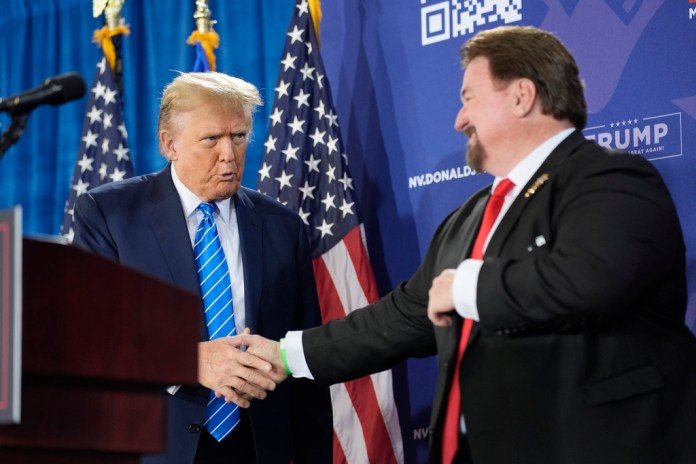
A judge in Nevada on Thursday dismissed for the second time a case involving six defendants who faced charges of illegally claiming they were the state’s electors after President Donald Trump was declared the loser in the 2020 presidential election.
In her ruling, Clark County District Judge Mary Kay Holthus tossed out forgery charges against […]
Original source:
Read at Washington ExaminerHow We See It
New Republican Times Editorial Board
Second time now. A Nevada judge looked at the forgery case against the six Republicans who signed on as alternate electors in 2020 and threw it out again, not on some technicality nobody can explain, but because the underlying theory of the case doesn't hold up under a judge's actual scrutiny. That matters. This wasn't a jury letting emotion cloud judgment. It was a judge, twice, saying the state's case doesn't work.
Remember how this was sold. These six people were cast as forgers, as conspirators in some shadow plot to overturn a presidential election, facing years in prison for a document that even the article's own framing struggles to describe as anything more than a contingency filing tied to a legal dispute over the results. Every state has a process for what happens if a court challenge to an election succeeds. Acting under that process, however politically charged the moment was, is not the same thing as forgery. Prosecutors wanted it to be. Twice now, a judge has told them it isn't.
This is the pattern nationally with these fake elector cases, from Georgia to Michigan to Nevada. Big press conferences, dramatic charges, headlines that treat the defendants like they'd been caught robbing a bank. Then the cases hit real judicial review and start falling apart because the legal theory was built for a headline, not a courtroom. You don't get to indict your way around a weak case.
None of this means 2020 wasn't contested hard, or that Trump's team didn't push legal arguments that ultimately lost. It just means the attempt to criminalize ordinary participants in that fight, people who signed a document and went home, keeps failing when actual judges look at it closely. That should tell prosecutors something about how this whole exercise was conceived in the first place.
Commentary written with AI assistance by the New Republican Times Editorial Board.