Pass Universal School Choice Now—Parents, Not Bureaucrats, Decide
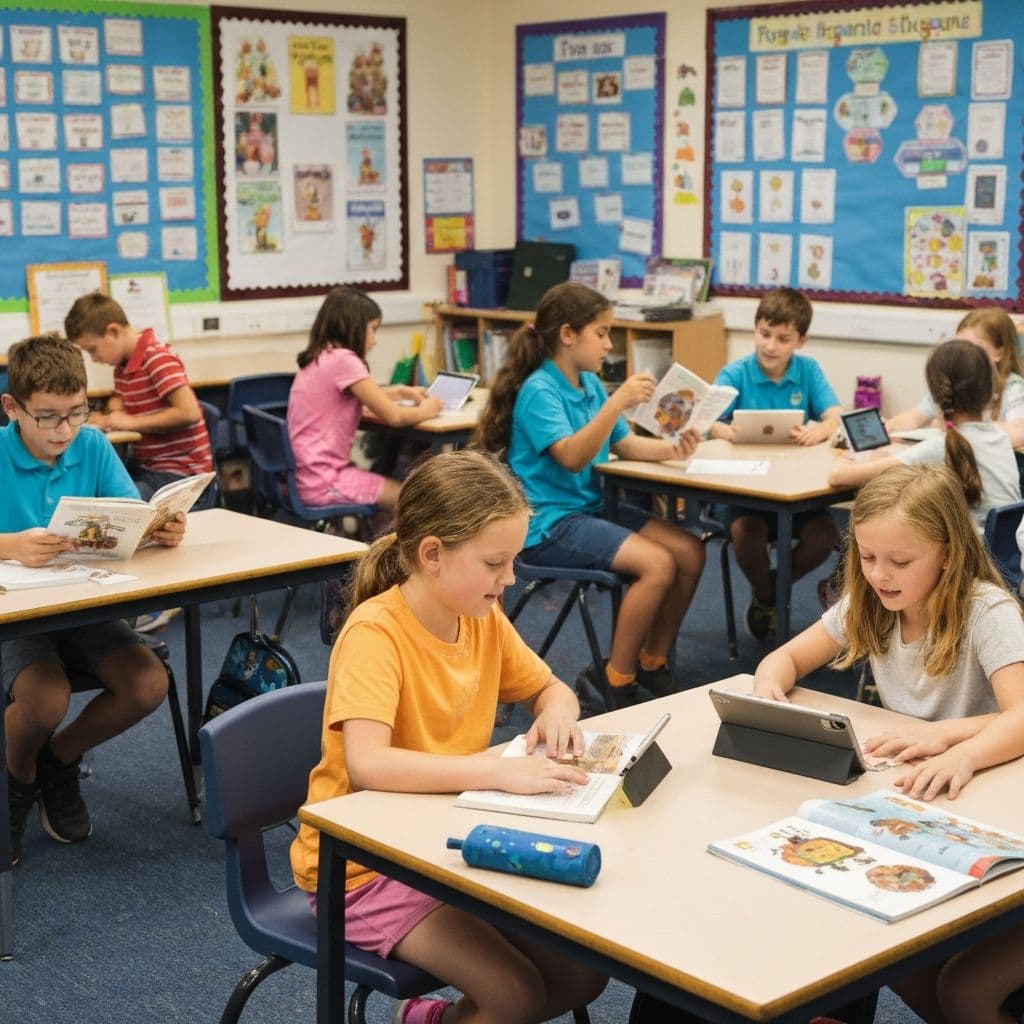
Parents assert authority over curriculum as education policy becomes a defining cultural battleground.
Republicans should treat school choice and parental rights as the defining domestic fight of 2026—and act now while voters are watching. The movement has won state by state, but Washington and blue-state bureaucracies are still rigging the game against families.
The immediate catalyst is the wave of post-2024 litigation and regulation aimed at choking off choice programs and reasserting top-down control. Teachers’ unions and allied attorneys general are trying to do in court what they can’t win at the ballot box: trap children in failing schools and silence parents who object.
Conservatives know what’s at stake because we’ve lived it. During COVID closures, schools told working families their kids could wait, while private and faith-based schools found ways to open. That betrayal ignited a national reckoning, and it didn’t end when the masks came off.
The principle is simple, and it’s older than any department in Washington. Parents have the first responsibility for their children’s formation—academic, moral, and civic—and government exists to support that duty, not replace it. When a school system claims authority over a child’s identity, values, and future, it has crossed a line no free people should tolerate.
School choice is not a “voucher debate,” and Republicans should stop letting opponents shrink it into a budget line. Choice is a civil rights issue for families who can’t afford to move to a better district. It’s also a competition policy that forces public schools to serve parents rather than manage them.
We have proof that choice works because states that embraced it are reshaping education in real time. Arizona’s Empowerment Scholarship Accounts, expanded in 2022, sparked new micro-schools, tutoring networks, and hybrid programs built around students instead of systems. Florida’s universal scholarship model, consolidated and expanded in 2023, continues to grow options while keeping parents in the driver’s seat.
Opponents claim choice “defunds” public schools, yet they never ask why public schools deserve a guaranteed monopoly regardless of performance. When students leave, funding should follow them—because the money is meant for the child’s education, not for preserving payrolls and administrative empires. A conservative party that believes in accountable spending should never apologize for that.
The courts have also clarified what many Americans already believe. In Espinoza v. Montana Department of Revenue (2020) and Carson v. Makin (2022), the Supreme Court ruled states can’t exclude religious schools from generally available aid programs just because they’re religious.
Those decisions are a green light for broad, faith-friendly choice—if Republicans are willing to use it.
Then came Groff v. DeJoy (2023), which strengthened protections for religious accommodation in the workplace, signaling the Court’s renewed seriousness about free exercise.
That matters in education because school employees and contracted providers increasingly face ideological litmus tests. A nation that can’t accommodate a Sabbath can’t be trusted to educate children without coercion.
Meanwhile, parental rights are being tested in more direct ways. In Parents Involved in Community Schools v. Seattle School District No. 1 (2007), the Court warned against race-based sorting, yet some districts keep finding new ways to classify children by identity and politics. Families see the same pattern: officials hide the ball, then accuse parents of “censorship” when they demand transparency.
Republicans should be clear about the policy target: government-run secrecy. Districts should not be allowed to withhold curriculum materials, social-transition policies, or outside vendor content from parents who are legally responsible for their children. When schools insist on “privacy” from parents, they are not protecting kids; they are protecting the institution.
Make Choice National State victories are real, but they are not enough because millions of families are stuck in states that refuse to budge. Congress should move a national choice agenda that respects federalism while breaking the blue-state blockade. The cleanest path is funding portability and tax relief that lets parents direct education dollars to the school or service that works.
The House has already put markers down with proposals like the Educational Choice for Children Act (ECCA), which would create a federal tax credit scholarship mechanism supported by voluntary contributions. That approach avoids building a new federal school system while still expanding access where unions have locked the doors.
Republicans should reintroduce it early in the next Congress and make every Democrat explain why poor parents deserve fewer options than wealthy ones.
Republicans should also use existing law to protect choice from discrimination. Title VI and the Equal Protection Clause should not be twisted into tools for ideological gatekeeping. If a state offers education aid, it must be neutral toward religion, viewpoint, and lawful family decisions—or it should lose federal leverage.
Codify Parental Rights Choice without parental rights becomes a shell game, because parents can pick a school yet still be shut out of what their child is taught and told. The Parents Bill of Rights Act, passed by the House in 2023, set a solid framework: curriculum transparency, the right to review library materials, and meaningful consent for sensitive instruction. Republicans should treat that bill as a floor, not a ceiling.
At the state level, legislatures should adopt clear due-process protections for families. If a child is disciplined, placed in special programs, or subjected to counseling on sensitive topics, parents must be informed in plain language and given an appeal process. Sunlight is not harassment; it is governance.
This isn’t about banning books or hunting teachers. It is about making institutions answer to the people who pay the taxes and raise the kids. A school that can’t defend its materials to parents has no business presenting them to children.
Republicans should also defend charter schools, home schooling, and education savings accounts from regulatory sabotage. Bureaucrats will try to smother choice with paperwork, accreditation traps, and one-size-fits-all testing schemes that erase innovation.
The goal is freedom with accountability—basic financial transparency and fraud prevention, not a slow-motion takeover.
Democrats will say this is a “culture war.” Fine—then let’s fight the right war for the right reasons. A nation that cannot trust parents cannot sustain ordered liberty, because family is the first school of citizenship and character.
Now comes the assignment for Republicans. Pass universal choice where you govern, and make it easy to use: simple applications, direct payment systems, and broad eligibility. In Washington, advance ECCA-style tax credit scholarships, protect religious providers under Espinoza and Carson, and force transparency with a federal parental rights baseline.
Finally, use the bully pulpit with moral clarity. Tell the truth: monopoly schooling has failed too many kids, and secrecy has broken trust with too many parents. Stand with families, fund students not systems, and make 2026 the year America’s schools remember who they work for.
NRT commentary uses AI assistance. Read about automated checks or report a correction.