

Senate to vote on holding Fauci in contempt while state investigations bubble up
Conservative principles face implementation challenges as policy meets political complexity.
Rand Paul has been chasing this for years, and now it's actually landing on a committee agenda with a vote attached to it. That's the part worth noticing. Contempt votes are rare, and they're usually theater that dies quietly.
New Republican Times Editorial Board
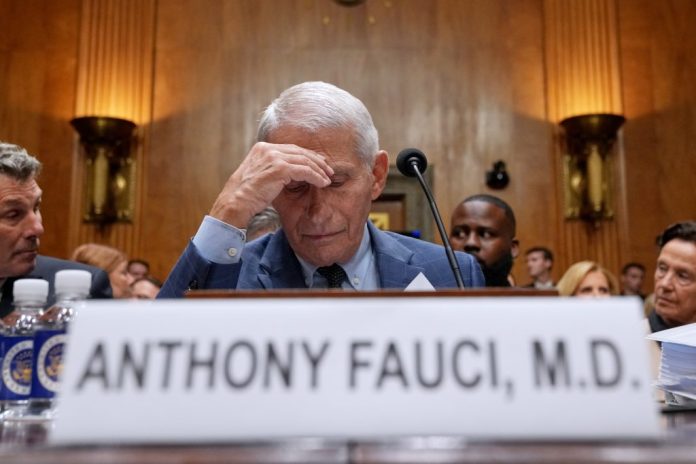
Dr. Anthony Fauci will face a Senate committee vote Thursday on whether to hold him in contempt of Congress, as three Republican attorneys general also launched a separate investigation into the former top U.S. health official over his handling of the COVID-19 pandemic.
Sen. Rand Paul (R-KY), chairman of the Senate Homeland Security and Governmental […]
Original source:
Read at Washington ExaminerHow We See It
New Republican Times Editorial Board
Rand Paul has been chasing this for years, and now it's actually landing on a committee agenda with a vote attached to it. That's the part worth noticing. Contempt votes are rare, and they're usually theater that dies quietly. This one is happening alongside three state attorneys general opening their own investigations, which means Fauci isn't just dealing with a Senate committee anymore. He's dealing with people who have subpoena power and no reason to let this fade.
The pattern here is familiar. For years, questions about gain-of-function funding, the lab leak theory, and the origins of masking and lockdown guidance were treated as fringe or conspiratorial. Now those same questions are the subject of formal proceedings. That gap between "how dare you ask" and "let's subpoena the records" is not a small thing. It tells you the original dismissal was never really about the evidence.
None of this means contempt gets voted through cleanly or that state investigations produce anything dramatic. Committees deadlock, subpoenas get litigated, and officials with good lawyers usually find a way to slow-walk everything into irrelevance. But the fact that multiple independent bodies, at different levels of government, are still circling the same man over the same pandemic response years later says something about how thin the original explanations were.
People were told to trust the process and not ask too many questions. The questions didn't go away just because they were unpopular. Whatever the committee votes Thursday, that's the real story sitting underneath it.
Commentary written with AI assistance by the New Republican Times Editorial Board.