

Simon & Schuster Gives Book Deal to Palestinian Writer Who Calls Jews ‘Ghouls,’ ‘Cockroaches’ and ‘Demons’: Publisher Praises Her ‘Lyrical’ Books
This story raises questions about governance, accountability, and American values.
Somewhere in a Manhattan office, an editor read language calling Jews "ghouls" and "cockroaches" and decided the word that mattered most was "lyrical. " That's not an accident of taste. That's a choice about what kind of speech a major publishing house is willing to launder into respectability, and who gets the benefit of the doubt when the rhetoric turns dehumanizing.
New Republican Times Editorial Board
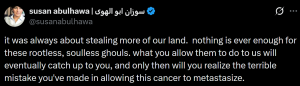
A disgraced Palestinian author who has openly celebrated the murder of Jews and Christians has received a coveted book deal from Simon & Schuster, the prestigious New York City publishing house, the Washington Free Beacon can report.
The post Simon & Schuster Gives Book Deal to Palestinian Writer Who Calls Jews ‘Ghouls,’ ‘Cockroaches’ and ‘Demons’: Publisher Praises Her ‘Lyrical’ Books appeared first on .
Original source:
Read at Free BeaconHow We See It
New Republican Times Editorial Board
Somewhere in a Manhattan office, an editor read language calling Jews "ghouls" and "cockroaches" and decided the word that mattered most was "lyrical." That's not an accident of taste. That's a choice about what kind of speech a major publishing house is willing to launder into respectability, and who gets the benefit of the doubt when the rhetoric turns dehumanizing.
We've heard the arguments before. Poetic license. Context of occupation. The difference between political anger and genuine bigotry. But "cockroaches" and "demons" aren't metaphors that survive translation into some more palatable meaning. Those are the exact words used historically to soften people up for violence against them, and everyone in that building knows it. Simon & Schuster didn't stumble into this deal. Someone read the material, understood what it said, and signed off anyway.
The bigger tell is the marketing language. Praising the work as lyrical isn't ignorance, it's framing. It's the publishing industry doing what it does now reflexively: dressing up content that would end a career in any other context, so long as the target is Jewish. Imagine the reaction if an author had used similar language about any other ethnic or religious group and a publisher responded by highlighting the prose style.
None of this requires banning anybody or demanding a boycott to make the point. It just requires saying plainly what happened. A publisher was handed language celebrating the murder of Jews and Christians, and instead of walking away, they wrote a press release about craftsmanship. That's not an editorial oversight. That's a values statement, whether Simon & Schuster wants to own it or not.
Commentary written with AI assistance by the New Republican Times Editorial Board.