

The Frozen Market For Homes
This story raises questions about governance, accountability, and American values.
A lot of mainstream coverage treats today’s housing freeze like a mysterious mood swing in the market, or a problem that can be solved with another clever subsidy. Tucker’s framing gets closer to the truth: policy choices boxed people in. When money was made artificially cheap, prices inflated.
New Republican Times Editorial Board
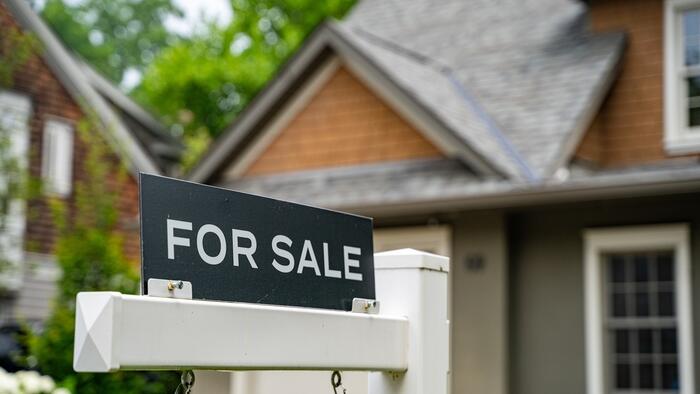
The Frozen Market For Homes Authored by Jeffrey Tucker via The Epoch Times, Mortgage rates on a 30-year loan just hit 7 percent, intensifying problems on the demand side. Mortgages plus insurance—which turns a half-million dollar house into a $1.2 million house plus property taxes—became unaffordable for another class of buyers while already out of reach for most people.
On the supply side, millions of existing homeowners are locked into COVID-era mortgages of 3 percent or lower, which makes them negative in real terms. That’s a great deal unless you sell and then have to buy again.
It would make no sense to sell in any case, but you are still stuck paying ever higher property taxes on ever higher valuations. This has produced a problem that is evident in January’s new home sales numbers, ...
Original source:
Read at ZerohedgeHow We See It
New Republican Times Editorial Board
A lot of mainstream coverage treats today’s housing freeze like a mysterious mood swing in the market, or a problem that can be solved with another clever subsidy. Tucker’s framing gets closer to the truth: policy choices boxed people in. When money was made artificially cheap, prices inflated. Now higher rates expose how little of that “wealth” was real.
The missing concern is public trust. Families were nudged into bidding wars, then told rising taxes and insurance were just the new normal. Homeowners can’t move without punishment, and first-time buyers face a wall of payments that don’t match wages. That is not a healthy market. It is a managed one.
Conservatives start with sound money and fair rules, not gimmicks. More demand-side credits simply bid prices up again. What helps is more supply, fewer local barriers, and property tax restraint so ownership does not become a lifetime squeeze.
The principle at stake is institutional stability: a housing system that rewards work and saving, not leverage and policy whiplash.
Commentary written with AI assistance by the New Republican Times Editorial Board.