

Top diplomats of China, Cambodia and Thailand meet as Beijing seeks to strengthen role in dispute
Strategic competition with Beijing demands clarity on American commitments and economic leverage.
The coverage treats Beijing’s sit-down with Cambodia and Thailand as a tidy example of regional “problem-solving. ” That framing skips the obvious question: why should China be the convener when it is also the power most eager to rewrite the balance of influence in Southeast Asia? Border disputes are not solved by photo ops in a Chinese province.
New Republican Times Editorial Board
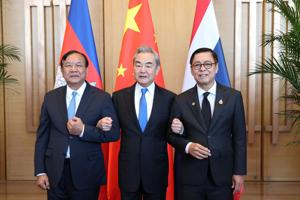
Foreign ministers from Cambodia and Thailand have convened with their Chinese counterpart to discuss the border dispute between the two Southeast Asian countries. The trilateral meeting Monday was held in a southwestern Chinese province north of the region where the
Original source:
Read at Dailygazette.comHow We See It
New Republican Times Editorial Board
The coverage treats Beijing’s sit-down with Cambodia and Thailand as a tidy example of regional “problem-solving.” That framing skips the obvious question: why should China be the convener when it is also the power most eager to rewrite the balance of influence in Southeast Asia?
Border disputes are not solved by photo ops in a Chinese province. They are shaped by leverage, debt, and quiet security commitments. Conservatives worry that Beijing uses mediation to normalize its role as referee, then turns that access into port rights, surveillance ties, and pressure on neighbors who can least resist.
The United States should measure this through national security, not diplomatic theater. A durable order depends on sovereignty, rule of law, and public trust in institutions that are not controlled by a rival great power.
The principle at stake is simple: stability in Asia comes from fair, independent dispute resolution, not from letting China set the table and write the rules.
Commentary written with AI assistance by the New Republican Times Editorial Board.