

Triumphal arch design plans unveiled by Trump
This story raises questions about governance, accountability, and American values.
NPR’s framing treats Trump’s proposed triumphal arch as either vanity or kitsch, as if the only serious question is whether Washington needs another oversized prop. That misses what the debate is really about: who gets to shape the symbols on the National Mall, and under what rules. Conservatives aren’t instinctively hostile to grand civic architecture.
New Republican Times Editorial Board
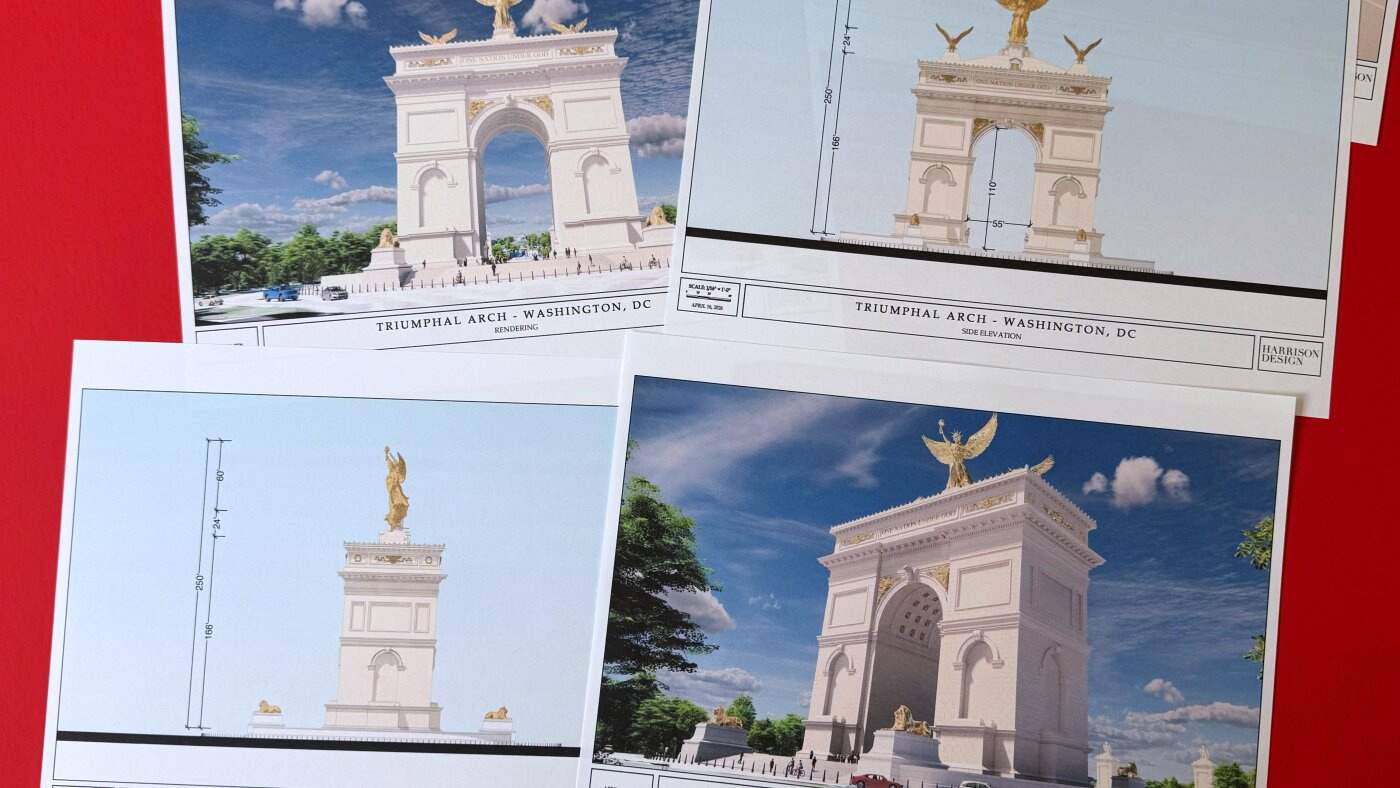
The proposed 250-feet-tall, white-and-gilded monument would stand on the National Mall in Washington, D.C., by the Potomac River.
Original source:
Read at NPRHow We See It
New Republican Times Editorial Board
NPR’s framing treats Trump’s proposed triumphal arch as either vanity or kitsch, as if the only serious question is whether Washington needs another oversized prop. That misses what the debate is really about: who gets to shape the symbols on the National Mall, and under what rules.
Conservatives aren’t instinctively hostile to grand civic architecture. But the Mall isn’t a personal canvas. Any monument should clear transparent public process, respect institutional stewardship, and avoid turning shared space into a partisan Rorschach test. A 250-foot structure also raises basic issues of security planning, long-term maintenance, and whether it displaces more urgent national priorities.
The principle is simple: public monuments should strengthen public trust and national unity, not test how far a political brand can extend into America’s most solemn ground.
Commentary written with AI assistance by the New Republican Times Editorial Board.