

Voter ID Is the Minimum Standard for Election Integrity
Election integrity questions persist as states navigate federal mandates and voter confidence.
Confidence in elections is a civic necessity, not a partisan preference. As 2025 ends, close local races and rising turnout have made basic safeguards more urgent, not less.
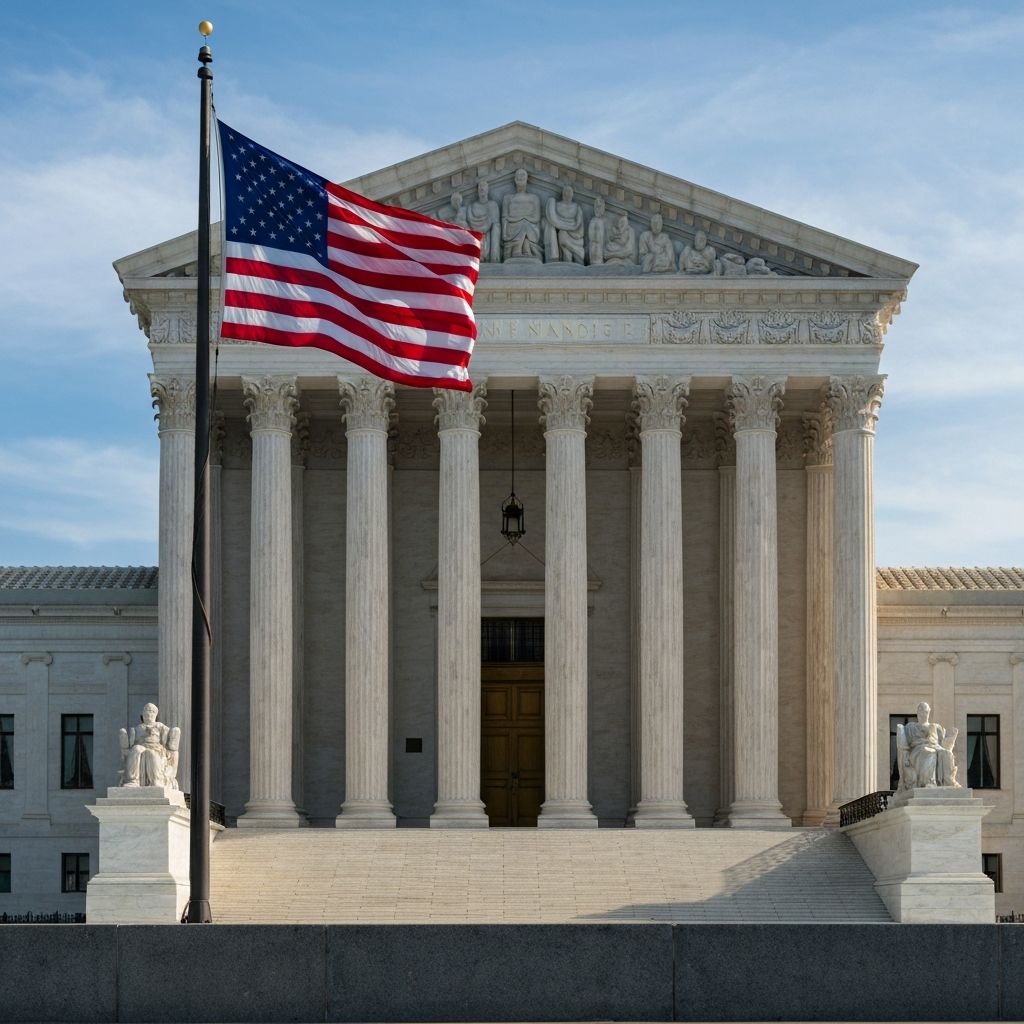
When citizens doubt the rules, they doubt the outcomes. That distrust does not stay in politics; it spills into public safety, school boards, and community life.
Democrats Chose Litigation Over Clear Rules
For years, many Democratic officials have treated voter ID as inherently suspect instead of plainly normal. They have fought state laws in court and in legislatures, then blamed “confusion” when standards vary precinct to precinct.
States also share blame when they pass ID requirements without making compliance simple. A rule that is hard to follow is a rule that invites resentment, even when the goal is sound.
The result is a patchwork where voters hear sweeping claims but see uneven practice. That gap is where conspiracy theories grow.
Voter ID, paired with free and accessible IDs, is the clearest way to protect the ballot while treating every lawful voter with equal respect.
Courts Allowed a Patchwork That Undermines Trust
Federalism gives states wide authority over elections, but courts have often left voters with inconsistent signals. When cases like Crawford v. Marion County upheld voter ID while later disputes narrowed or expanded state discretion, the public heard only that “judges decide,” not what standards actually are.
That uncertainty has a cost. Election officials need clear guidance months before Election Day, not shifting expectations weeks before early voting.
Some activists argue that voter ID is “voter suppression” by definition. That claim fails because identification is required for far more routine tasks than voting, including boarding a plane, opening a bank account, or picking up many prescriptions.
Others argue fraud is rare, so safeguards are unnecessary. That defense misunderstands election integrity: the objective is not only to catch criminals, but to prevent doubt, deter abuse, and make outcomes easier to accept.
Republicans Must Set a Nationally Coherent Standard
Republicans should lead with a simple promise: secure voting that is easy for eligible citizens and hard for ineligible actors. That means insisting on identity verification while removing practical obstacles to getting an ID.
A serious approach also rejects theatrics. Election integrity is built by accurate voter rolls, transparent procedures, and predictable rules that apply to everyone.
Republicans should demand three things:
First, states should require voter ID for in-person voting and provide a clear process for verification for eligible voters who vote by mail. The rule should be uniform statewide, not a county-by-county experiment.
Second, states should provide free, widely available IDs and make issuance practical. That means mobile ID units, extended DMV hours near major elections, and automatic fee waivers for low-income applicants.
Third, states should adopt clean, routine maintenance of voter rolls using auditable methods. That includes matching against death records and verified change-of-address data, with prompt notice and an easy path for legitimate voters to correct mistakes.
Congress can help without commandeering state elections. It should fund ID access and election administration upgrades tied to measurable performance, like shorter lines and faster adjudication of provisional ballots.
Election officials should also publish transparent chain-of-custody procedures for ballots and equipment. Public confidence increases when citizens can see how ballots move, how access is controlled, and how irregularities are documented.
The Republican Standard
Republicans should vote for state legislation that pairs voter ID with free IDs and expanded access to obtain them. Any bill that mandates ID while ignoring access is an unforced error.
Republicans should demand that every secretary of state publish a plain-language election manual by midsummer of each election year. If rules change after that date, the state should explain the reason in writing and provide uniform training statewide.
Republicans should reject claims that integrity requires limiting lawful participation. Secure elections are not achieved by narrowing the electorate; they are achieved by enforcing clear identity rules, maintaining accurate rolls, and running transparent procedures on time.